


Looking for freelance work with strong earning potential? Freelance headhunting offers the opportunity to build an extensive candidate network and earn commission on successful placements. This article explains how the role works and the practical opportunities it offers.
What is a freelance headhunter? Definition and core responsibilities
Freelance headhunting is becoming more common because it offers flexibility and helps employers find qualified talent. Although freelancers work independently, they play an important role in matching candidates with suitable positions.
Headhunters and freelance headhunters explained
Headhunters are professionals or firms that specialise in executive search and specialist recruitment for client employers. They recruit for management and more senior positions, as well as roles requiring scarce expertise that is difficult to find. A defining feature of headhunters is that they often identify and engage candidates who are not actively considering a career move.

A freelance headhunter is an independent professional who works with established headhunting firms or directly with employers’ HR departments to identify and introduce suitable candidates for open positions.
- Working arrangements: Flexible hours and location, without a formal employment contract.
- Primary focus: Sourcing candidates, making initial contact and screening their profiles.
- Income model: Primarily commission for each candidate who is successfully hired and completes probation.
>> Explore CNK Consulting Vietnam’s executive search services to understand how freelancers can enter the recruitment market.
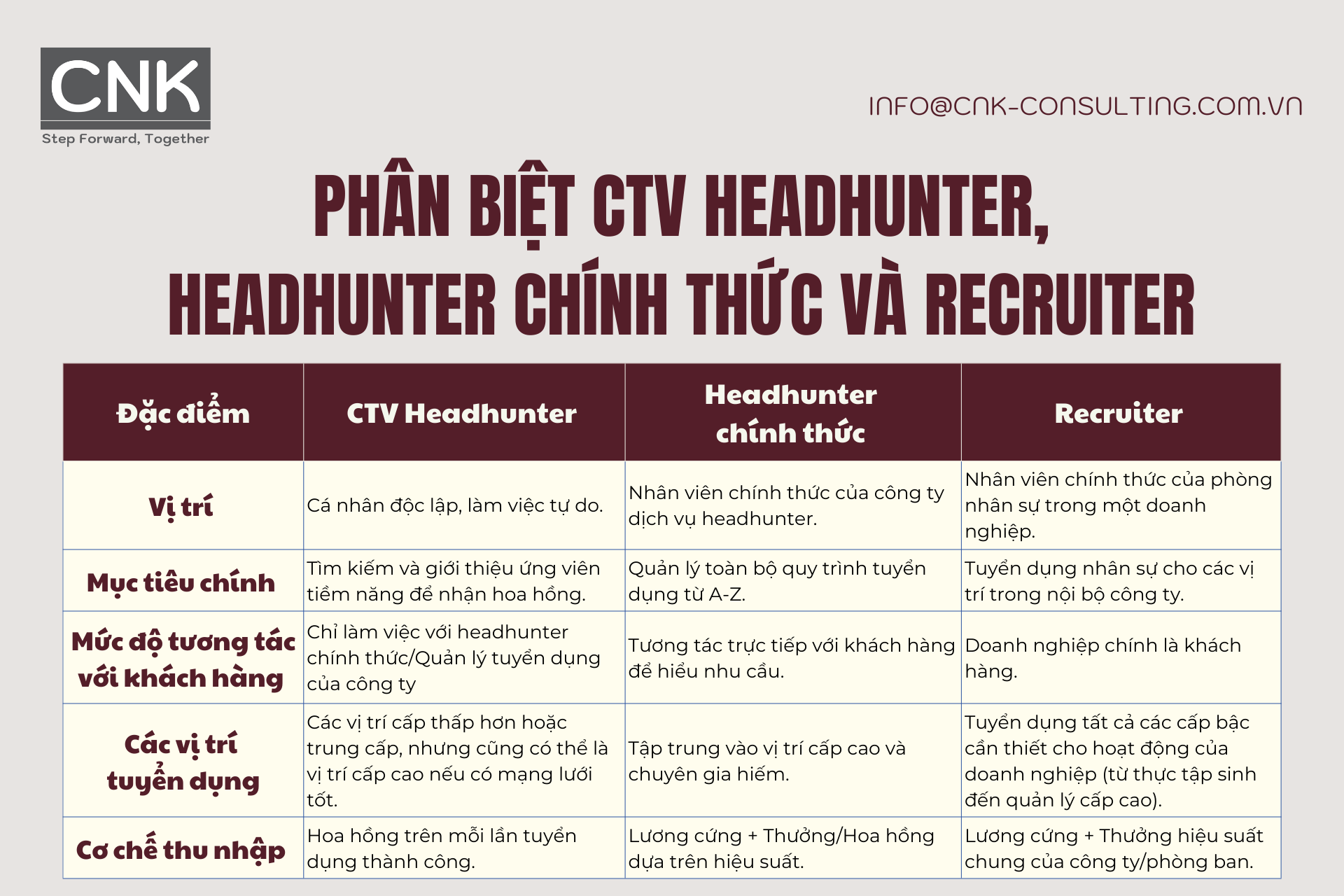
Freelance headhunters, salaried headhunters and in-house recruiters
Freelance headhunters, salaried headhunters and in-house recruiters all support recruitment, but their employment arrangements, responsibilities and ways of working differ considerably.
A freelance headhunter’s main responsibilities
Freelance headhunters play an important role in addressing candidate supply, a major challenge in executive search and specialist recruitment.
Research and candidate network development
- Market research: Understand industry hiring needs, salary levels and the employers where potential candidates work.
- Networking: Continually expand professional relationships and join specialist communities to identify passive candidates.
- Data management: Build and maintain a candidate database so you can respond quickly to new hiring requirements.
Candidate sourcing and outreach
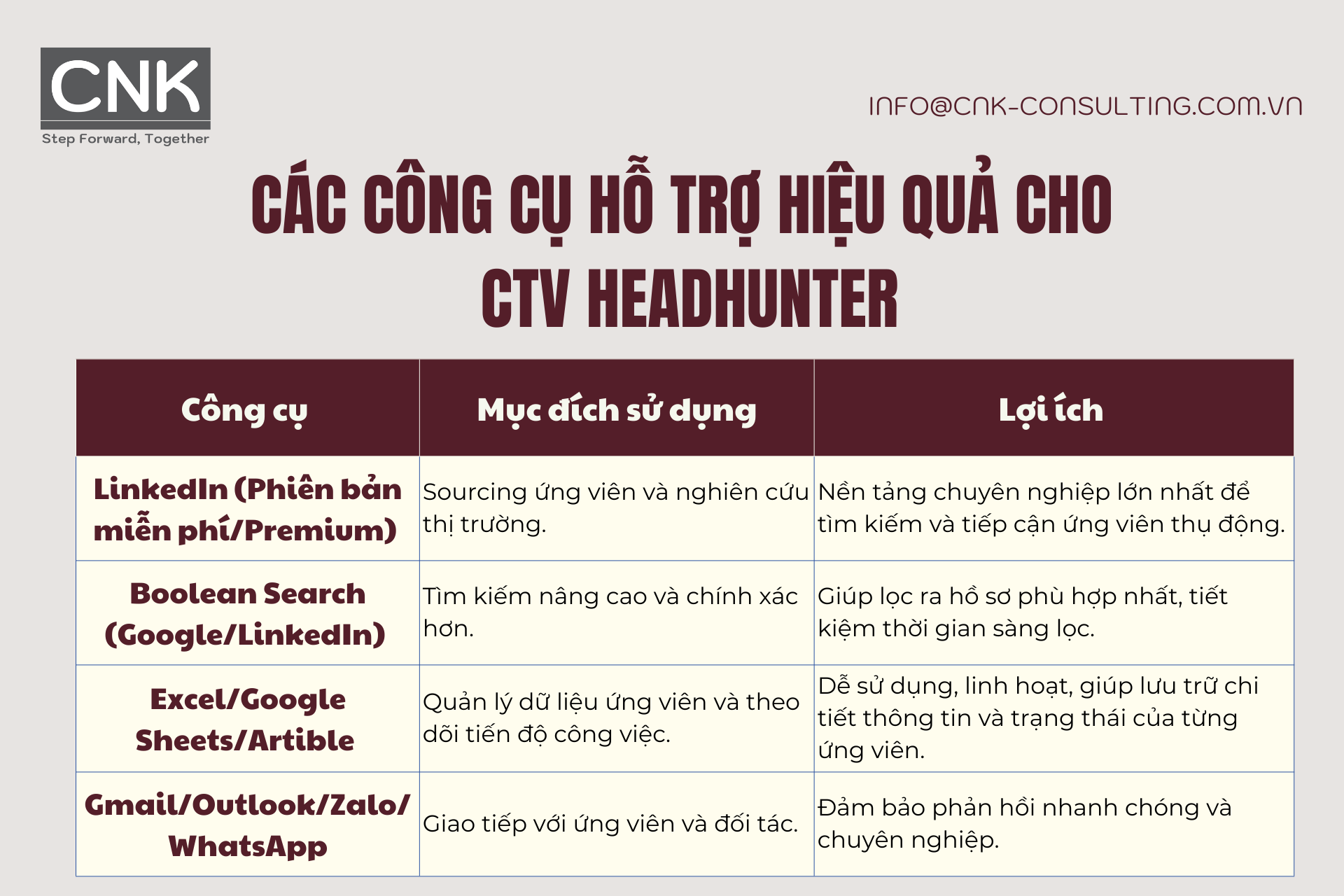
- Sourcing: Use professional tools such as LinkedIn Recruiter Lite, social media, forums and referrals to find candidates who match the job description.
- Outreach: Write professional, persuasive emails or messages to candidates who are settled in their current roles, presenting new opportunities discreetly and clearly.
Screening and initial assessment
- CV review: Assess candidates’ skills, experience and suitability against the job description.
- Initial interviews: Conduct brief telephone or video interviews to verify information, assess interest and understand salary and benefits expectations.
- Suitability assessment: Confirm that candidates are motivated to move and committed to participating in subsequent interviews.
Candidate introductions and support
- Profile submission: Send thoroughly screened candidate profiles, with your assessment summaries, to the supervising headhunter at the partner firm or to the employer.
- Information and preparation: Give candidates detailed information about the employer, its culture and the role to prepare them for more in-depth interviews.
- Follow-up: Track candidates’ progress through subsequent interview stages.
Benefits and opportunities of freelance headhunting
Freelance headhunting offers substantial opportunities for people who want control over their working hours, the potential to increase their income significantly and a broader professional network.

Commission income and uncapped earning potential
Freelance headhunters earn most of their income through successful placements, a key reason many freelancers enter the profession. Commission payments and the ability to increase earnings through performance mean there is effectively no fixed revenue ceiling.
How freelance headhunter commissions work
Instead of a fixed monthly salary, freelance headhunters receive a substantial commission linked to the successful candidate’s annual salary. Typical commissions range from 10% – 20% of the service fee the headhunting firm receives from its client, or a percentage calculated directly from the candidate’s annual salary.
For example, successfully placing an engineer earning USD 2,000 per month could generate a commission of USD 1,000 – USD 3,000 for that placement.
Uncapped earning potential
A freelance headhunter’s income depends entirely on performance and the number of successful placements. With an extensive network and successful placements in highly paid senior roles, your earnings could substantially exceed those of an in-house recruiter or even a salaried headhunter.
Access to multiple markets
You can work with multiple headhunting firms at the same time and extend your candidate searches across industries and locations.
Flexibility in when and where you work
Flexibility is a major attraction for freelancers, including freelance headhunters.
- Flexible hours: You can organise your own schedule without being tied to office hours. Evenings and weekends can be suitable times to contact candidates who are busy during the working day.
- Flexible location: Most work takes place by telephone, email and online tools. You can work from home, a café or while travelling, provided you complete your sourcing responsibilities.
- Work–life balance: This flexibility makes it easier to balance freelance assignments with personal projects and family commitments.
Building your network and professional reputation
Headhunting is known as a relationship-driven profession. Freelancers benefit considerably from this aspect of the work.
- Build a strong candidate network: Regular contact with specialists, senior managers and talented professionals across sectors helps you develop a valuable candidate pool. This network becomes a professional asset and a source of candidates for future assignments.
- Develop communication and persuasion skills: Encouraging someone who is doing well in their current role to consider a new opportunity requires tactful communication, careful listening and effective negotiation.
- Establish a professional personal brand: As an independent headhunter, your credibility and reputation help employers trust you with difficult assignments and build candidates’ confidence in you.
Access to senior roles and sectors in high demand
Freelance headhunters are the first to learn about labour market developments.
- Access to exclusive information: You are often the first to hear about strategic vacancies and confidential searches that client employers do not want to publicise.
- Insight into market trends: Job descriptions and partner requirements help you understand which sectors face talent shortages, which skills command the highest salaries and how large corporations plan their workforce development.
- A foundation for your next career move: Freelance headhunting experience provides a strong base for moving into a salaried headhunter role or a senior in-house recruitment position.
Challenges, barriers and the skills needed to succeed
Alongside flexibility, control over working hours and earning potential, freelance headhunting brings pressure and demanding professional requirements.
Common challenges for freelance headhunters
Income stability
Income stability is the biggest barrier for freelancers generally and freelance headhunters in particular. Earnings depend entirely on commission, while recruitment processes typically take 1 to 3 months. Candidates may also leave during probation. You could earn a substantial amount in some months and have no income in others if you do not complete a placement.
Quality and performance pressure
Headhunting firms only accept high-quality candidates who meet 100% of the client’s requirements. Although freelancers may not have the same rigid KPIs as salaried employees, conversion rates still create pressure. You may need to review numerous CVs and approach hundreds of candidates to find 1 – 2 suitable people for a role.
Intense competition
Recruitment is highly competitive. You compete with other freelancers, large headhunting firms and employers’ in-house recruitment teams. Strong candidates often receive approaches from several recruiters at once, making successful placements more difficult.
Limited access to information
Freelancers may not have access to the advanced search tools or detailed client information available to salaried headhunters. This means investing more effort in research and verification.
Skills for success as a freelance headhunter
To overcome these challenges and succeed as a freelance headhunter, you need a specialist skill set:
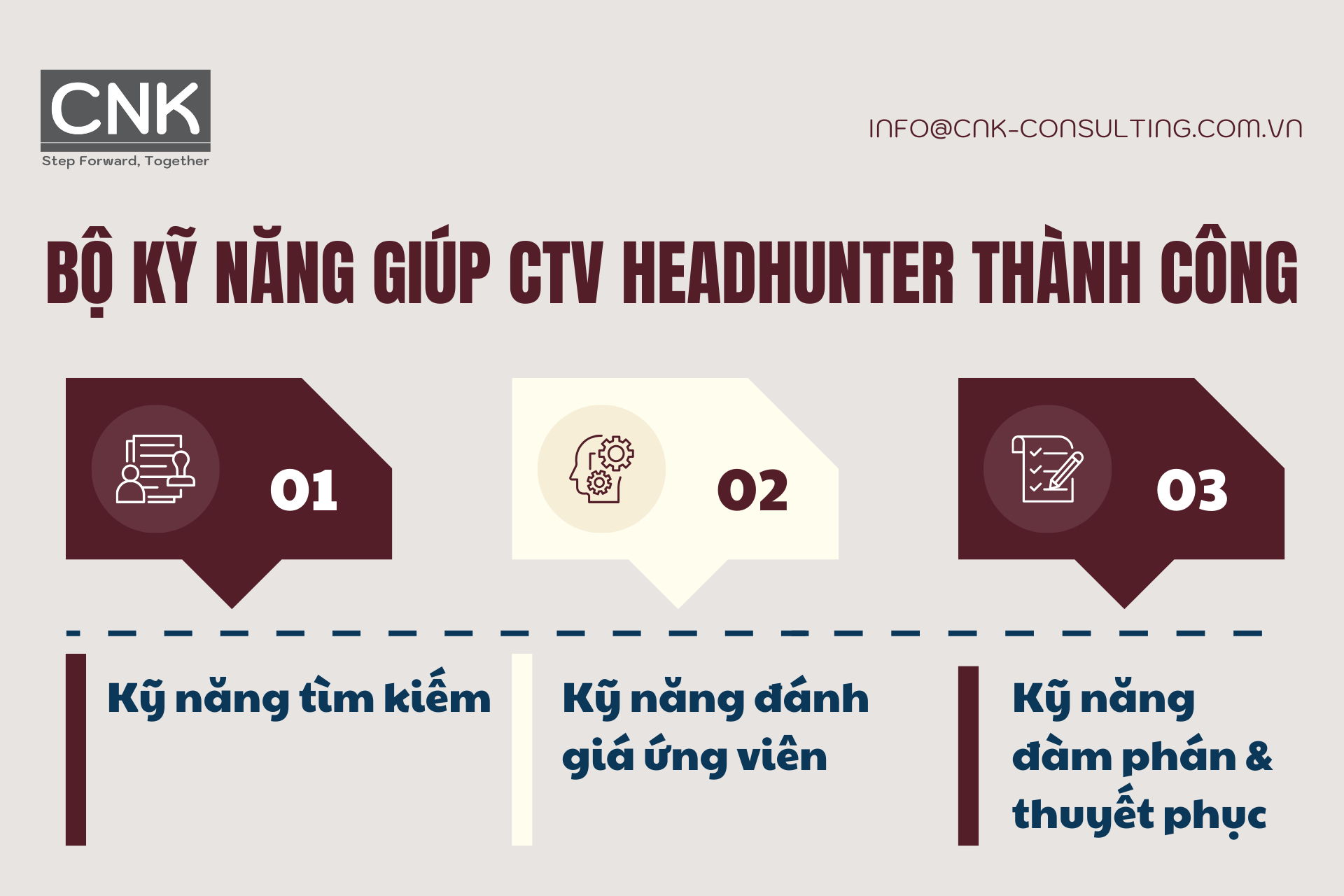
Sourcing skills
- Boolean search: Use logical operators such as AND, OR and NOT, along with quotation marks, to find target candidates efficiently and accurately on platforms such as Google, LinkedIn, Facebook and GitHub.
- Passive candidate sourcing: Strong candidates are often not actively looking for work. You need to find information about them through channels beyond conventional job boards to reach the right people at the right time.
Candidate assessment skills
- CV interpretation and analysis: Look beyond experience to assess employment stability, career progression and indications of cultural fit.
- Initial interviewing: Ask focused, relevant questions to establish professional experience, salary expectations, reasons for moving and commitment to the opportunity.
Negotiation and persuasion skills
- Engaging candidates: Present the opportunity convincingly, highlighting the benefits of the new role compared with the candidate’s current position.
- Managing expectations: Ensure candidates understand the salary, benefits and responsibilities from the outset to avoid wasted time and reduce the risk of a later resignation.
Why a candidate database matters and how to build it
A candidate database is a freelance headhunter’s most valuable asset.
Why a candidate database matters
A candidate database helps you respond quickly to new hiring requirements. When a vacancy arises, you can review people you have already spoken with instead of starting the search from scratch.
How to build a candidate database
- Tools: Use simple tools such as Excel or Google Sheets, or a free CRM/ATS system for freelancers.
- Information to record: Beyond names and telephone numbers, record candidates’ expertise, current employer, salary expectations and reasons for declining or expressing interest in previous opportunities.
- Relationship maintenance: Stay in touch regularly, send birthday greetings or share useful industry information to maintain relationships with candidates in your network.
A practical guide to becoming a freelance headhunter
The following steps explain how to get started, from establishing partnerships with headhunting firms to managing daily work. They provide a practical route into the profession and help you organise your work effectively.
How freelancers work with headhunting firms
A clear understanding of the process supports effective collaboration and helps prevent commission disputes.
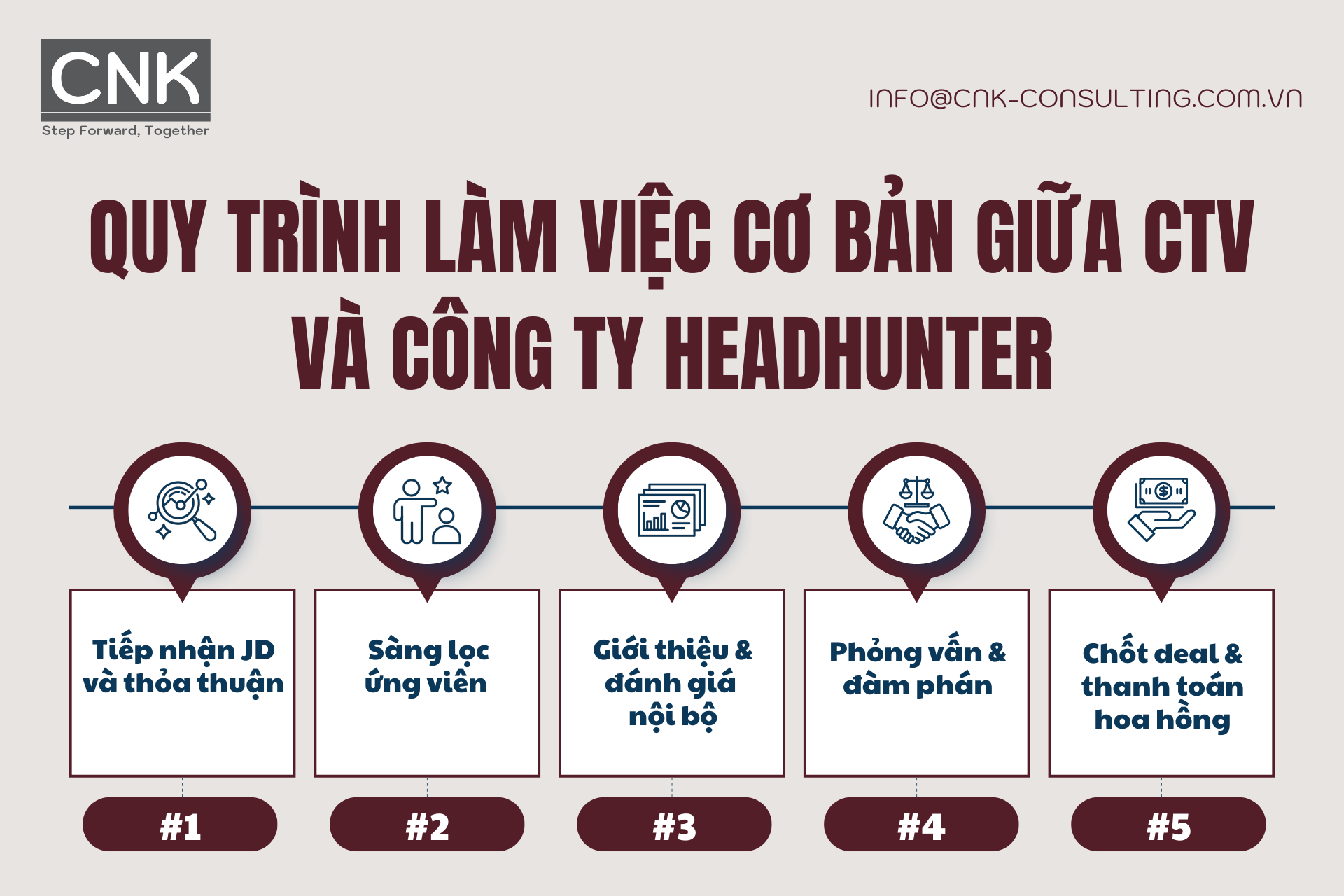
Receive the job description and agree terms
- The headhunting firm sends the freelancer job descriptions for urgent or difficult-to-fill positions.
- Both parties confirm the freelancer’s commission rate, usually a percentage of the total service fee or the candidate’s salary, the recruitment deadline and the placement guarantee terms, typically covering the candidate’s 2 – 3 months of probation.
Screen candidates
- The freelancer uses their network and sourcing skills to identify, approach and conduct initial interviews with candidates.
- The freelancer submits only candidates who have been thoroughly screened and are interested in the opportunity.
Submit candidates for internal review
- The freelancer sends each candidate’s CV, contact details and an assessment summary to the salaried headhunter at the partner firm.
- The salaried headhunter reviews the profile and submits the CV to the client.
Support interviews and negotiations
- The candidate attends interviews with the client. The freelancer and salaried headhunter work together to support the candidate and client, for example by scheduling interviews and assisting with salary negotiations.
Complete the placement & receive commission
- When the candidate is hired and signs the contract, the freelancer receives an initial portion of the commission, for example 50%.
- Once the candidate completes probation, which serves as the guarantee period, the freelancer receives the remaining commission.
Finding and working with reputable headhunting firms
Choosing the right partners has a major influence on the quality of assignments you receive and your chances of success.
Search on LinkedIn
- Look for headhunting firms specialising in areas where you have expertise, such as IT, marketing, sales or finance.
- Contact their managing consultants or team leaders directly with an introduction outlining your network and experience.
Join freelance & referral communities
- Many professional groups on Facebook, Zalo and career platforms advertise opportunities for freelance headhunters.
- Use talent sourcing platforms that connect freelancers with assignments, where these are available in your market.
Criteria for choosing a reliable partner
- Commission transparency: The firm must clearly explain its commission structure and payment schedule.
- Assignment quality: Look for clearly defined roles, reasonable salaries and a firm with a credible market reputation.
Useful tools and platforms for freelance headhunters
The right tools and platforms can significantly improve your efficiency as a freelance headhunter. This section helps you identify the tools most relevant to your work.
Calculating commission and understanding what affects it
Understanding how commission is calculated is essential to protecting your financial interests.
The basic calculation for a headhunting firm’s fee is usually [X%] x [Candidate’s gross annual salary]. Gross annual salary is the candidate’s total fixed annual income (base salary + fixed allowances). Headhunting fees typically range from 15% – 30% of the candidate’s gross annual salary. The freelancer’s commission is usually Y% of that service fee or Z% of gross annual salary.
For example:
- The candidate’s gross annual salary is USD 30,000.
- The headhunting fee is 20% of gross annual salary: USD 30,000 x 20% = USD 6,000.
- The freelancer’s agreed commission is 20% of the service fee.
- The freelancer receives: 6,000 x 20% = USD 1,200.
Factors that affect commission
- Difficulty of the assignment: Scarcer talent and more senior roles, such as a technical director, attract higher freelance commissions.
- Time to placement: You may receive an additional bonus for completing a placement quickly.
- Guarantee period: You receive the full commission if your candidate remains employed and performs well beyond the guarantee period, usually 60 – 90 days.
The future of freelance headhunting in a changing labour market
Technology and remote working trends are changing recruitment rapidly. Freelance headhunters need to understand these developments to remain competitive.
Technology trends affecting candidate sourcing
Technological developments are reshaping how freelance headhunters work.
The growing use of AI in sourcing
- AI tools are being used to automate initial CV screening, predict candidate suitability and even send initial outreach emails.
- The challenge: freelancers cannot rely on tools alone. Their role will shift from sourcing towards assessment and building relationships with candidates.
Big data and analytics
Market data and candidate behaviour are becoming easier to analyse, helping freelancers understand where and how to find scarce talent.
Video and mobile recruitment
Video interviews, videos introducing roles and outreach optimised for mobile devices are becoming essential for engaging busy candidates more effectively.
Advice for building a sustainable headhunting career
To remain relevant in the digital era, freelance headhunters need to focus on quality, specialisation and adaptability.
- Choose a niche: Specialise in a defined area, such as recruiting AI/Data Science engineers or senior retail executives, rather than covering every type of role.
- Invest in your reputation and professional ethics: Maintaining strict confidentiality around candidates’ personal information and clients’ internal information is essential.
- Keep learning and build effective systems: Continue learning about new sourcing tools and specialist skills so you can negotiate effectively with experts. Build systems that help you use your time efficiently and focus on the most valuable activities.
Conclusion
Freelance headhunting offers career potential but requires professionalism, strong sourcing skills and considerable self-discipline. Flexible hours, the potential for substantial earnings growth and opportunities to expand your network make it an attractive option for those who want to build an independent recruitment career.
CNK Consulting Vietnam
Building high-quality teams
Hotline: +84 369 882 579
Email: info@cnk-consulting.com.vn
Address: 12BT6 Thanh Bình Garden, 3 Nguyễn Cảnh Dị, Định Công Ward, Hanoi, Vietnam
References:
- Hunteed: How to become freelance recruiter (How to become a freelance recruiter)
- SkillSeek: Freelance Recruiter vs Headhunter: Which Model Maximizes Your Earnings? (Differences between freelance recruiters and headhunters, and which model maximises earnings).
- SHRM: Rethinking Talent: Recruiting for the Workforce That Powers Business Growth
Receive workforce market updates
Recruitment, talent market and workforce development updates from CNK.