


Attracted by the prospect of earning thousands of dollars but unsure where to start? Executive search is highly competitive. Without clear direction, new consultants can burn out and leave within months of starting their probation. This article outlines a career path from intern to manager to help you build your career in the industry.
What is a headhunter? Responsibilities and key distinctions
Headhunters are often seen as discreet talent scouts who connect employers with highly qualified candidates. But what does the role involve, how does it contribute to the labour market, and how does it differ from in-house recruitment? Understanding these responsibilities is the starting point for anyone considering a career in executive search.
Defining the headhunter’s role
A headhunter, also known as an executive search consultant or recruitment agency consultant, is a recruitment professional working for a service provider. Their main responsibility is to identify, approach and engage talented candidates, particularly those already in stable employment, for senior, specialist or otherwise hard-to-fill positions on behalf of clients.

Headhunters act as intermediaries, representing client employers when approaching highly qualified professionals who are often not actively looking for a new role. Compared with conventional recruitment, executive search places particular emphasis on candidate quality, strategic fit and confidentiality.
Executive search has become an increasingly popular career choice among young professionals. It offers opportunities to work with business leaders and experienced specialists, build an extensive professional network, and develop communication, negotiation and strategic thinking skills.
These opportunities help explain why many people see executive search as a viable long-term career with strong potential.
>> Considering a career in executive search? Explore CNK Consulting Vietnam’s services to understand how consultants connect employers and candidates.
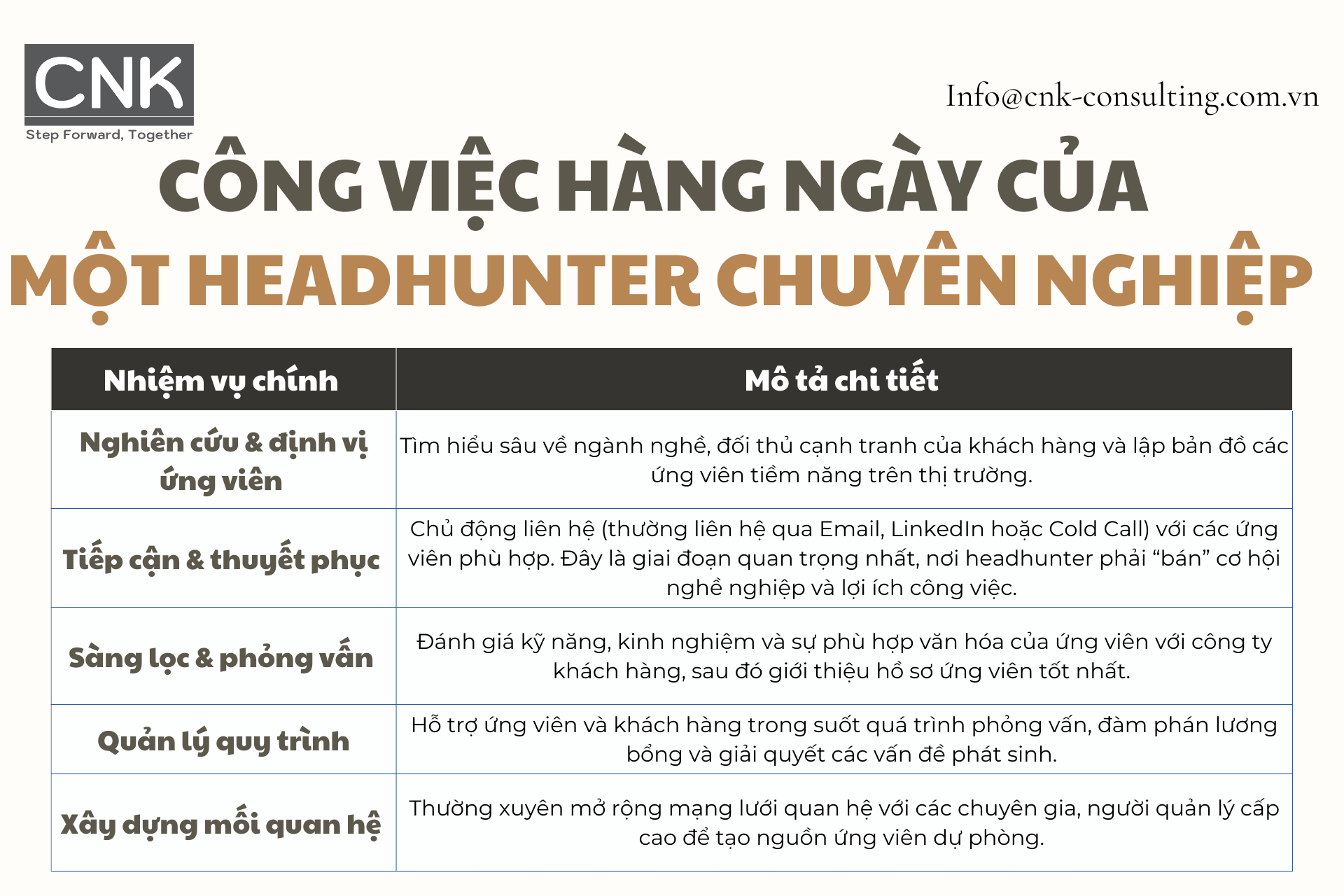
A headhunter’s daily responsibilities
A headhunter’s work extends beyond posting vacancies. It combines market research, sales and professional advisory services.
Headhunters and in-house recruiters: How their roles differ
Headhunters and in-house recruiters are often confused, although their working methods and objectives differ. The distinctions below explain the responsibilities of each role.
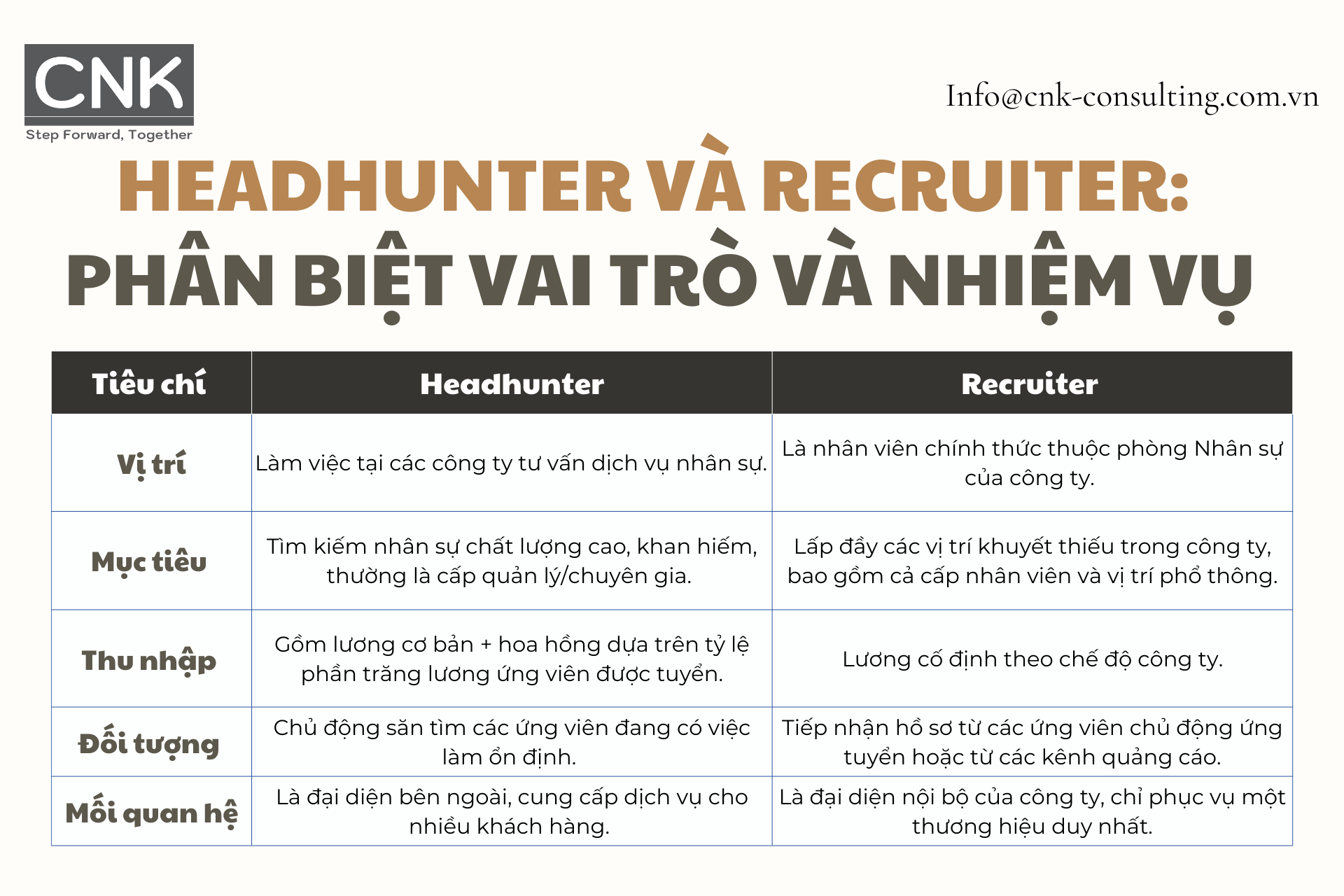
A headhunter acts as a strategic adviser, identifying people who can make a significant difference to a business. An in-house recruiter focuses on recruitment operations and maintaining the organisation’s workforce.
The executive search career path: Progression and opportunities
Executive search offers a clear career path shaped by performance and the ability to expand professional networks. Progression can lead to management, as well as senior opportunities in other areas of HR and business.
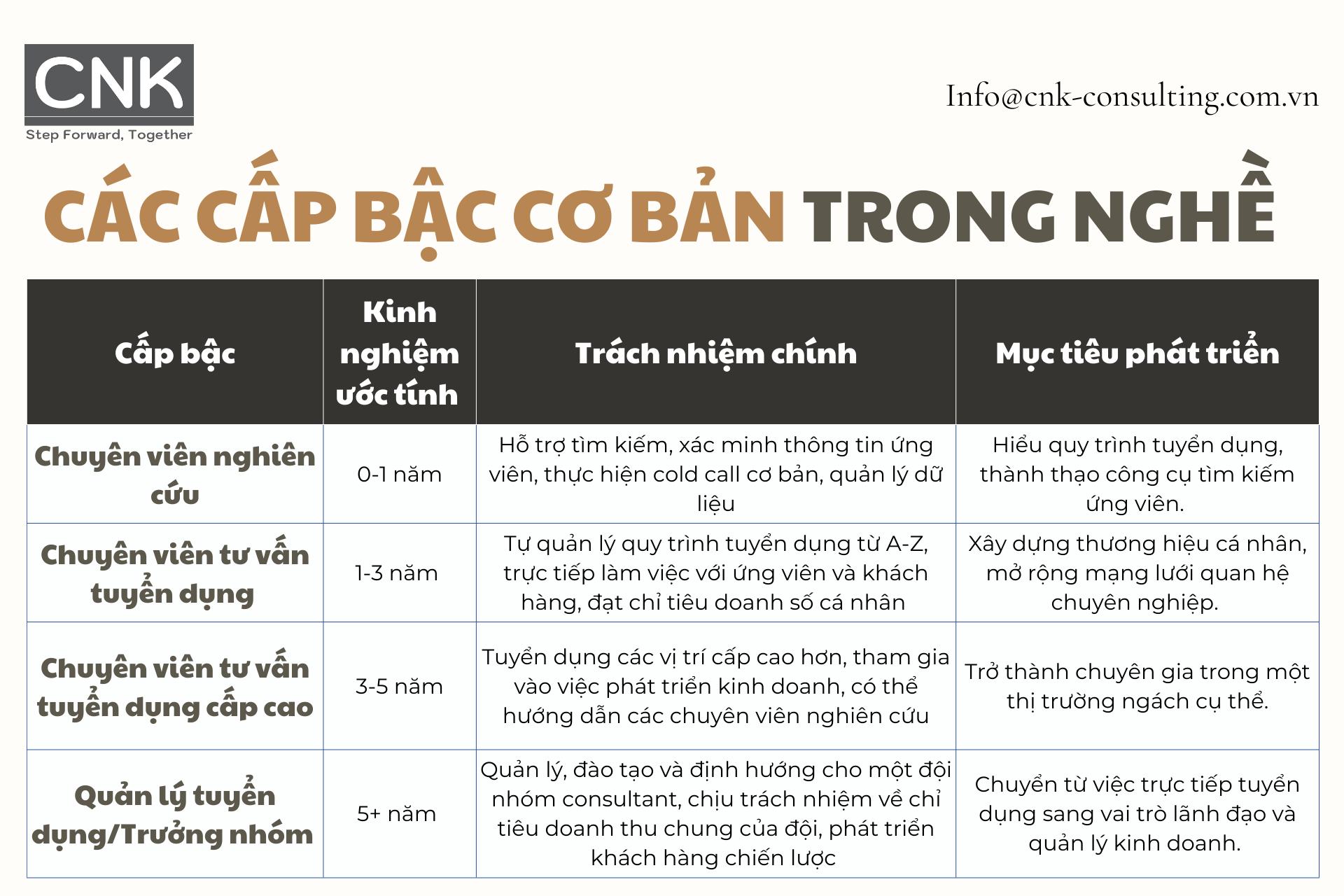
Typical career levels
Career progression within an executive search firm typically depends on experience, skills and the ability to generate revenue.
Which sectors and agencies employ headhunters?
Headhunters usually work for recruitment consultancies and develop a strong sector specialism to improve their effectiveness. This creates specialist recruitment markets with high demand:
- Information technology: Recruiting software engineers, solutions architects and chief technology officers (CTOs). This is among the sectors with the highest commissions because qualified talent is scarce.
- Finance & banking: Recruiting auditors, investment analysts, chief financial officers (CFOs) and risk management specialists.
- Fast-moving consumer goods (FMCG) and retail: Focusing on brand managers and senior marketing and sales professionals.
- Manufacturing & engineering: Recruiting plant directors, senior engineers and supply chain management specialists.
Your choice of agency also makes a significant difference:
- Global/Tier-1 agencies: Large international firms, such as Robert Walters and Hays, with global processes and client networks. These firms often recruit for C-suite positions.
- Local/boutique agencies: Smaller firms specialising in one or two sectors, often offering flexibility and a detailed understanding of the local market.
Career options beyond executive search
The skills developed in executive search, including negotiation, process management and labour market knowledge, are highly valuable and transferable to other roles:
- In-house recruitment: This is the most common transition. Agency experience can lead to a talent acquisition specialist or TA manager role at a large corporation. Candidate sourcing and assessment skills help consultants build effective internal teams.
- HR management: Exposure to different business models and an understanding of organisational roles can support progression into an HR Business Partner (HRBP) or Head of HR position, with involvement in broader strategic planning.
- Sales/business development: Client prospecting, persuasion and relationship management skills transfer readily to B2B sales or business advisory roles, where communication and influence remain essential.
- Starting a business: With an established candidate and client network, many senior headhunters set up their own specialist search firms, becoming business owners and developing their chosen markets.
Essential skills for new executive search consultants
For those entering the profession, developing beyond routine recruitment to become an effective headhunter requires a combination of research skills, sales ability and an understanding of psychology.
The following three skill groups underpin long-term success in the profession:
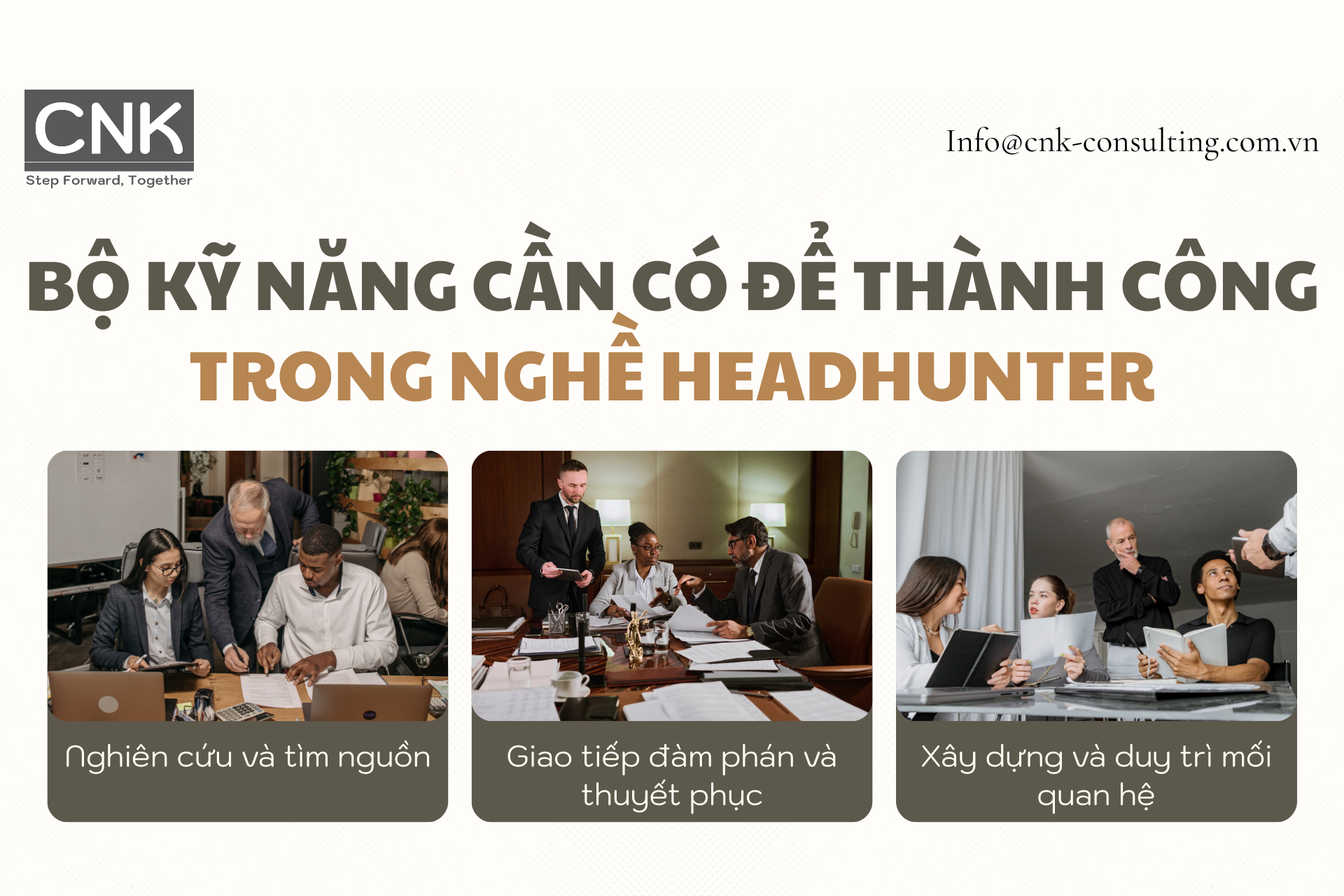
Sourcing and research skills
Research and sourcing are fundamental to effective executive search. Without the ability to identify and approach suitable candidates, consultants lack the candidate pipeline needed to move a recruitment process forward.
- Market research: Analysing industries, understanding competitors’ organisational structures and identifying where potential candidates work.
- Sourcing: Using advanced search tools, particularly Boolean search, which applies operators such as AND, OR and NOT to filter profiles on LinkedIn, professional forums and databases.
- Profile assessment: Quickly assessing whether a candidate meets a role’s strategic requirements, looking beyond generic descriptions of responsibilities to understand the impact they have made.
Communication, negotiation and persuasion
Once suitable candidates have been identified, a headhunter must gain their attention and interest, particularly when they are satisfied with their current jobs. Communication, persuasion and negotiation skills help consultants build relationships and encourage candidates to consider new opportunities.
- Strategic communication: Effective communication requires careful listening as well as clear expression. Understanding a candidate’s motivations and current concerns allows consultants to present an opportunity in a way that addresses their needs.
- Persuasion: Headhunters use sales skills to communicate career opportunities and the client employer’s vision. This requires confidence, an understanding of candidates’ needs, and the ability to respond thoughtfully to feedback and rejection.
- Negotiation: Headhunters often help candidates and employers negotiate salary and benefits. They need objectivity, the ability to find mutually beneficial solutions, and the decisiveness to bring negotiations to an agreement.
Building and maintaining relationships
Networking requires more than a large contact list. It depends on building enough trust for candidates to welcome future conversations and work with you.
- Client relationship management: Maintaining lasting partnerships with employers by understanding their business needs and culture, with a perspective that extends beyond filling the immediate vacancy.
- Building a talent pool: Developing an extensive candidate network to approach when suitable roles arise. This includes staying in touch with candidates who were not selected, as they may be well suited to future opportunities.
- Confidentiality and professional ethics: Handling sensitive candidate and client information professionally and confidentially is fundamental to lasting trust.
Headhunter salaries and earnings in Vietnam
Earnings are a major consideration for anyone entering executive search. Understanding base salary, commission and actual take-home income provides a clearer picture of the profession’s financial rewards.
Base salary and commission structure
Headhunter pay typically consists of two main components: base salary and commission. This structure distinguishes executive search from fixed-salary roles and creates opportunities to increase earnings through performance.
- Base salary: The fixed monthly component of pay, usually reflecting the consultant’s experience and seniority.
- Commission: This variable component is a major part of the profession’s financial appeal. Commission is usually calculated as a percentage of a successfully placed candidate’s total first-year salary. The rate can range from 10% to 30%, depending on the firm and the seniority of the position. For example, if you place a candidate earning 240.000 VND/year at a commission rate of 15%, you would receive: 240.000 x 15% = 36.000.000 VND in commission for that placement.
Salary by seniority and experience (0-2 years, 3-5 years at manager level)
Headhunter salaries in Vietnam vary considerably, largely according to revenue generation and sector specialisation.
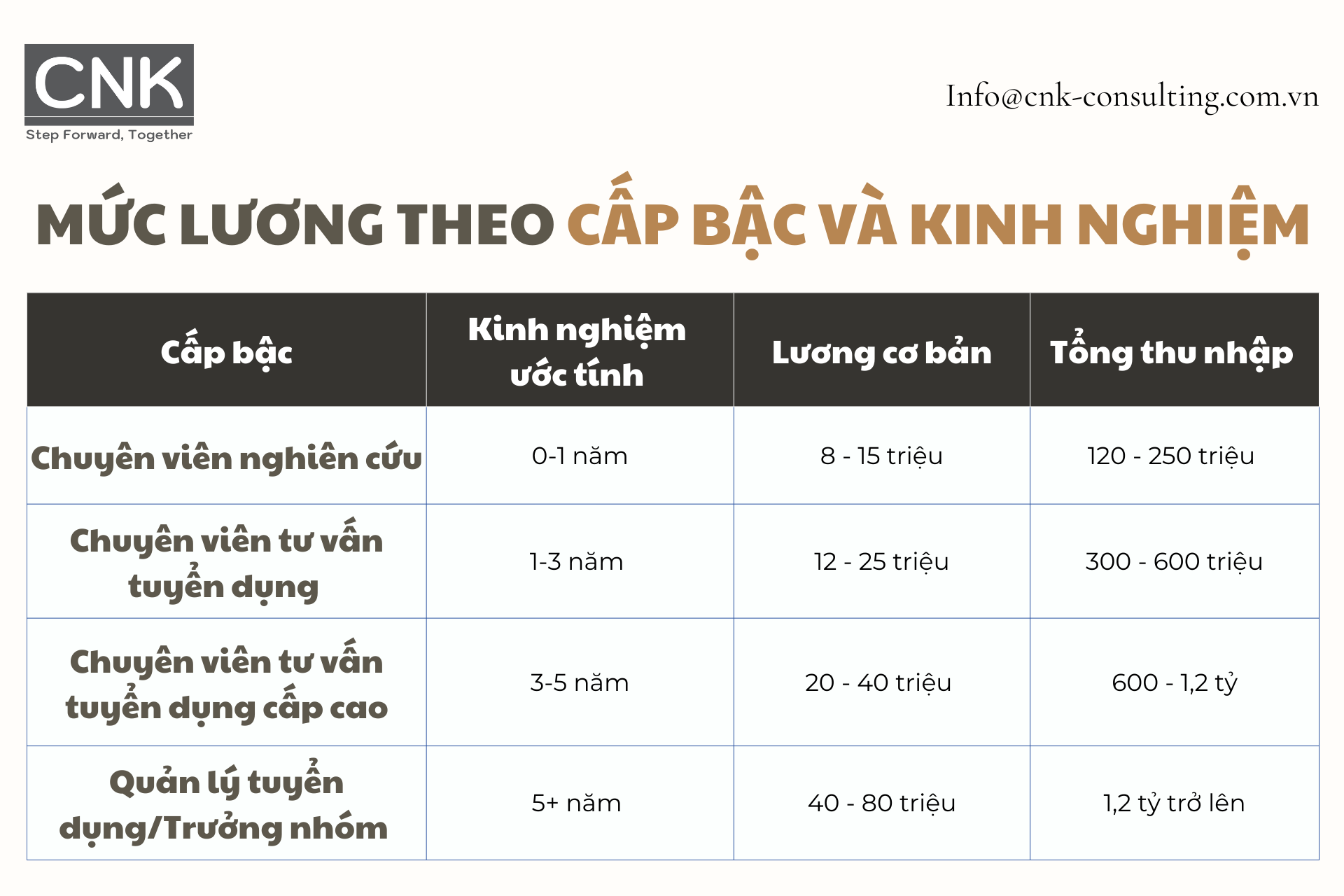
Note: These figures are indicative estimates only. Actual earnings may be significantly higher for consultants working in high-tech sectors who complete a large number of placements.
Financial challenges and pressures in executive search
High earning potential comes with significant pressures:
- Variable income: Commission is not guaranteed. In months without completed deals, consultants may have to rely entirely on their base salary. This can create considerable financial pressure, particularly for newcomers.
- Revenue targets: Headhunters face sustained pressure to meet individual and team targets.
- Intense competition: As recruitment markets change, headhunters continually compete with other agencies and employers’ in-house recruitment teams to secure talent first.
Advice for newcomers
For those considering a career in executive search, CNK’s consultants offer the following advice on establishing a clear direction and developing professionally.
Career advice for new executive search consultants
- Focus on a niche: Choose a sector that interests you or draws on your existing strengths, then develop detailed knowledge of that market. This helps you build subject expertise more quickly, strengthen your credibility and improve your ability to close deals.
- Approach the role as an adviser: Although executive search involves sales, approach candidates and clients as a strategic adviser. Your objective is to help candidates find the best development opportunities and help employers address their underlying staffing needs.
- Invest in communication skills: You will approach people you have never met, including senior professionals. Practise speaking confidently and professionally on the phone and writing effective introductory emails.
- Stay disciplined and patient: Executive search involves frequent rejection and lengthy, complex recruitment processes. Success takes time. Keep accurate records, follow up with candidates consistently and remain patient through months without revenue.
Essential tools for headhunters
Headhunters need to make effective use of technology to improve productivity:
- LinkedIn: An essential tool for candidate sourcing, networking and labour market research.
- Applicant tracking systems: Tools for systematically storing, tracking and managing candidate databases and recruitment processes.
- Boolean search techniques: Mastering advanced search syntax, such as Java OR Python AND Senior OR Lead NOT Fresher, to identify relevant candidates on open platforms.
Top 3 best-known executive search firms in Vietnam
Vietnam’s growing executive recruitment market has attracted many reputable search firms. The following 3 firms are highly regarded for service quality and effective delivery:

CNK Consulting Vietnam
Chosen by many employers for executive search, CNK Consulting Vietnam is known for its local market knowledge and specialist advisory approach.
CNK Consulting Vietnam’s strengths include recruiting mid-level and senior professionals, particularly for Vietnamese businesses expanding or restructuring their teams. The firm combines a network of qualified candidates, a thorough selection process and detailed sector expertise.
Its transparent, flexible approach, tailored to each employer’s needs, makes CNK a leading choice for many partners.
Navigos Search
Among the longest-established recruitment brands in Vietnam, Navigos Search is known for its standardised processes and extensive candidate database. Its candidate network spans multiple sectors, making it suitable for employers seeking to fill mid-level and management positions quickly.
Its strengths include handling complex recruitment requirements and reaching candidates who are not actively looking for work. Clear, professional processes have helped Navigos maintain its position among the market leaders over many years.
Robert Walters Vietnam
As an international recruitment firm operating in Vietnam, Robert Walters brings a global approach and professional recruitment standards. It is particularly strong in senior recruitment, including management and specialist roles for international businesses.
Its global network connects employers with qualified candidates across countries to meet international staffing requirements. Robert Walters recruits across sectors including finance, technology, manufacturing and marketing, applying consistent professional practices.
Conclusion
Executive search is a demanding career with uncapped earning potential and opportunities to build a strong professional network. It requires a balance of effective interpersonal communication and rigorous market analysis.
If you enjoy building relationships and solving complex business problems through people, and are prepared for the pressure of revenue targets, executive search is a career worth considering.
CNK Consulting Vietnam
Optimising your talent recruitment process
Hotline: +84 369 882 579
Email: info@cnk-consulting.com.vn
Address: 12BT6 Thanh Bình Garden, No. 3 Nguyễn Cảnh Dị Street, Định Công Ward, Hanoi, Vietnam
References:
- Harvard Business Review (HBR): The Seven Skills You Need to Thrive in the C-Suite (Provides analysis of executive recruitment trends).
- Forbes – The Headhunter Mindset: Turn Recruiting Into A Strategic Advantage (Helps HR professionals shift from conventional recruitment to strategic talent search).
- Wall Street Journal (WSJ): How to Work With Headhunters (Explains that headhunters serve client employers and helps candidates engage with them professionally and effectively).