


A headhunter typically takes 3–6 weeks to find a suitable candidate. The timeline depends on the role, job requirements and availability of qualified talent. Understanding these factors can help employers manage recruitment timelines more effectively.
How long does a headhunter typically take to find a candidate?
There is no fixed timeline for a headhunter to find a suitable candidate. It depends on the seniority of the role, talent scarcity and the employer’s confidentiality requirements. Understanding typical timelines helps employers plan recruitment and assess their search partner’s performance realistically.

>> CNK Consulting Vietnam provides comprehensive executive search and specialist recruitment solutions, helping employers reach suitable candidates from the outset.
Indicative timelines by role
The time a headhunter needs to screen, approach and present the first suitable candidates varies considerably:
- Entry-level and junior roles: Headhunters can typically present candidates within 1–2 weeks. These roles have a large candidate pool.
- Specialist and middle management roles: The average timeline is 2–4 weeks. These positions require specialist skills and proven experience.
- Senior, expert and C-level roles: Executive search can take 4 – 8 weeks, or 1 – 2 months. These candidates are often not actively looking for a new role, so headhunters must identify them, approach them discreetly and persuade them to consider the opportunity.
Timelines in practice: From 2 weeks to 6 months
In practice, the time a headhunter takes to find and present candidates typically ranges from 2 weeks to 6 months, depending on the complexity of the role and internal approval processes. Although headhunters can often identify suitable candidates quickly, getting them to their start date requires negotiation, assessment and completion of the necessary formalities.
- 2 – 6 weeks: This is typically an ideal timeframe for completing screening, interviews and a hiring decision for specialist roles.
- 2 – 3 months: This is the average timeline for middle management roles, including the candidate’s notice period with their current employer, which ranges from 30 – 45 days.
- Up to 6 months: Searches for senior executives, such as a Chief Executive Officer, or particularly scarce specialists, such as a Head of Security or a senior AI specialist, can take this long. They involve complex negotiations, thorough reference checks and waiting for candidates to complete existing projects or contracts.
Comparison with in-house recruitment and traditional channels
Compared with in-house recruitment or traditional channels such as website job advertisements, social media and employee referrals, headhunters often deliver suitable candidates faster and achieve better candidate quality, particularly for middle management and senior roles.
While conventional recruitment channels can take 2 – 4 months to attract, screen and interview suitable candidates, headhunters typically reduce this time by 30% – 50% through established networks and their ability to reach passive candidates.
Working with a headhunter also reduces the effort employers spend managing recruitment, lowers the risk of a poor hire and maintains confidentiality.
Related reading: How to choose a reputable executive search firm
4 key factors that determine how quickly headhunters find candidates
The time it takes to find a suitable candidate depends on more than the headhunter. Market conditions, the employer and the requirements of the role all contribute.
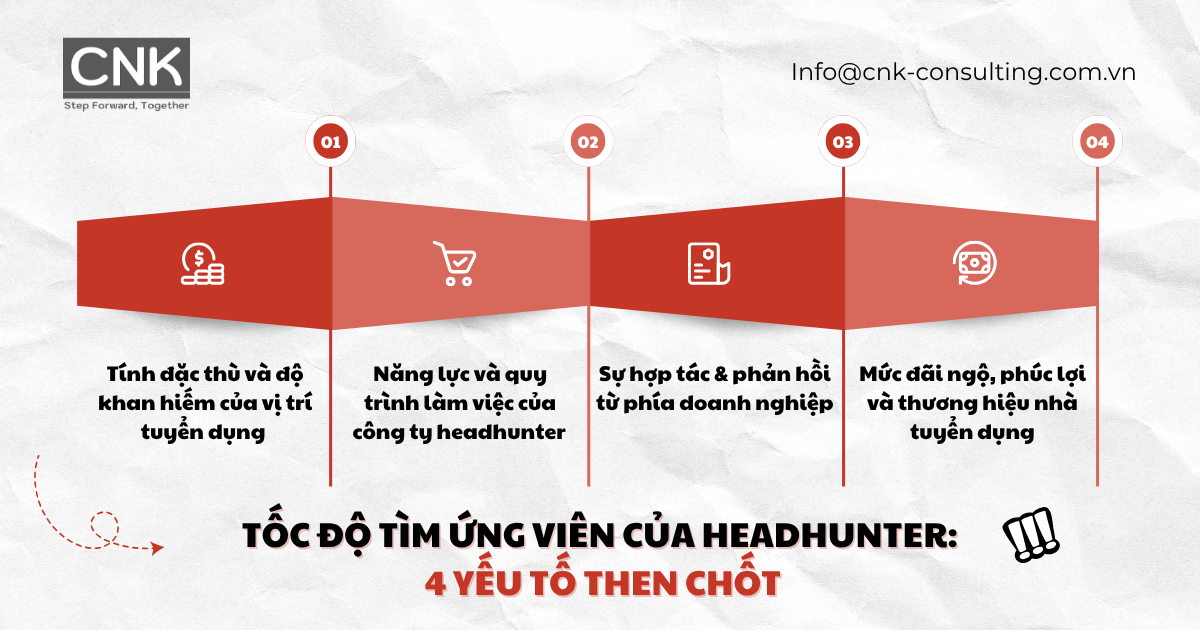
Role specialisation and talent scarcity
This is the most important factor: the more specialised the role and the scarcer the talent, the longer the search takes.
- Scarce talent: Some roles require rare specialist skills, such as a security engineer with cloud security experience and international certifications. The smaller the available talent pool, the more time headhunters need for research and sourcing.
- Seniority: C-level candidates often operate within private professional networks and rarely disclose an interest in changing roles. Reaching them requires a considered approach and time to build trust.
The search firm’s expertise and processes
The effectiveness of a headhunter in finding suitable candidates depends largely on the firm’s expertise and the quality of its search process. A professional executive search firm should provide:
- A strong candidate database: Access to a regularly updated pool of high-quality candidates, particularly passive candidates in specialist fields or areas with talent shortages.
- Extensive professional networks: The ability to use the search team’s personal and professional relationships to reach prospective candidates quickly, while maintaining a strong reputation among senior professionals.
- Efficient screening and thorough assessment: A capable headhunter does more than review CVs quickly. They assess overall suitability, including technical expertise, experience and cultural fit. This helps ensure that every candidate presented meets a high standard, saving time and improving the employer’s hiring success rate.
Employer collaboration and feedback
Employers need to collaborate actively and respond promptly to keep the recruitment process with a headhunter running smoothly. Even when a headhunter has strong candidates and a professional process, delays and poor coordination within the employer’s organisation can disrupt recruitment.
- Slow responses: If an employer takes days or weeks to arrange interviews after receiving candidate profiles, promising candidates may accept offers elsewhere.
- Complex interview processes: Too many interview rounds, or a lack of agreement between HR and senior leadership, can extend the timeline and leave candidates with an unprofessional impression.
Prompt, clear and transparent communication from the employer helps headhunters complete recruitment efficiently and improves the candidate experience.
Compensation, benefits and employer brand
The appeal of the role and the employer’s reputation are key to a successful search. Even an experienced headhunter with extensive networks cannot fully compensate for weaknesses in fundamentals such as pay or employer brand.
- Uncompetitive pay and benefits: A package below market levels makes it harder to persuade prospective candidates, extends recruitment timelines and increases the likelihood of rejection. Attractive pay and benefits remain essential to attracting senior talent.
- A weak employer brand: Senior professionals typically examine an employer’s reputation, culture and growth strategy carefully before considering a new opportunity. An employer brand that lacks a clear identity can prolong discussions, increase the risk of rejection and reduce the effectiveness of the search.
How to improve recruitment speed and results when working with a headhunter
To keep a search efficient and effective, employers should prepare thoroughly and agree on a clear way of working with their headhunter.
Prepare a detailed job description
- Distinguish essential requirements from preferences: Focus on the criteria that matter. Excessive or unnecessary requirements can leave headhunters searching for a candidate who does not exist.
- Agree on the salary range: Provide a realistic range from the outset so the headhunter can screen for suitable candidates and avoid presenting people whose expectations fall above or below the budget.
Set clear timeline KPIs and replacement guarantee terms
- Set timeline KPIs: Agree on specific milestones, such as presenting a shortlist of 3 suitable candidates within 14 days and making an offer decision within 7 days of the final interview.
- Agree on a replacement guarantee: Ask the headhunter to provide a guarantee period of 60 – 90 days. If the candidate leaves during this period, the headhunter will find a replacement at no additional charge. This demonstrates the headhunter’s commitment to candidate quality.
Further reading: Contracts for working with a headhunter
Illustrative scenario: Recruiting an IT Security Expert
A fintech company needs to recruit an IT Security Expert, a role in a field with particularly scarce talent.
The headhunter faces the following challenges:
- A limited candidate pool: Senior security specialists are often settled in their current roles and rarely seek new opportunities actively.
- Strict confidentiality requirements: The search must keep company and project information confidential.
- Demanding skills requirements: The role requires both deep technical expertise and experience in fintech. Very few candidates meet all the requirements.
The table below illustrates the recruitment stages and how collaboration affects the overall time needed to hire a security specialist:
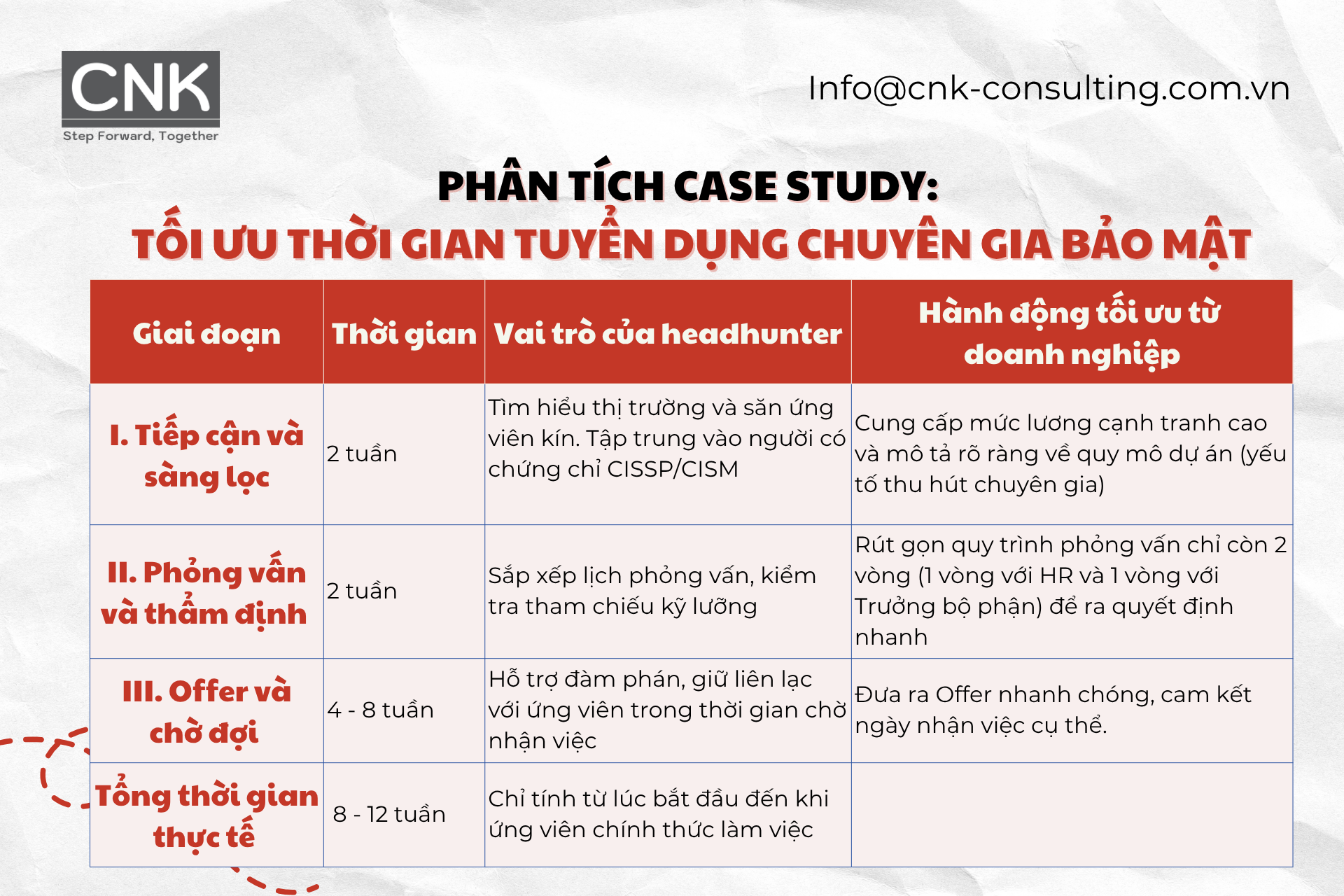
Even for hard-to-fill roles such as security specialists, close collaboration and prompt decisions can reduce the overall recruitment timeline from 6 months to under 3 months.
Conclusion
Engaging a headhunter is an effective way for employers to reach senior professionals, scarce specialists and candidates who are settled in their current roles, particularly when recruitment requires confidentiality and advanced expertise. The time needed to find candidates depends on the difficulty of the role, confidentiality requirements, candidate networks and employer collaboration.
A detailed job description, appropriate compensation and a well-coordinated process help employers improve recruitment outcomes, reduce risk and provide a professional candidate experience.
CNK Consulting Vietnam
A recruitment partner trusted by many employers
Hotline: +84 369 882 579
Email: info@cnk-consulting.com.vn
Address: 12BT6 Thanh Bình Garden, 3 Nguyễn Cảnh Dị Street, Định Công Ward, Hanoi, Vietnam
References:
- Steven Lu – Executive Search: The Complete Guide for Recruiters (2026) (Discusses engaging a headhunter as a strategic decision that goes beyond recruitment.)
- Spencer Hulse – A Complete Step-by-Step Guide to Hiring an Executive Search Firm (Provides a step-by-step guide to engaging a headhunter, emphasising the need for internal agreement among the board and C-level executives before working with a search firm.)
- Goldbeck Recruiting – Best Practices in Executive Recruitment: How to Hire Smarter (Focuses on executive recruitment best practices, particularly defining the role clearly and establishing long-term objectives before starting a search.)