

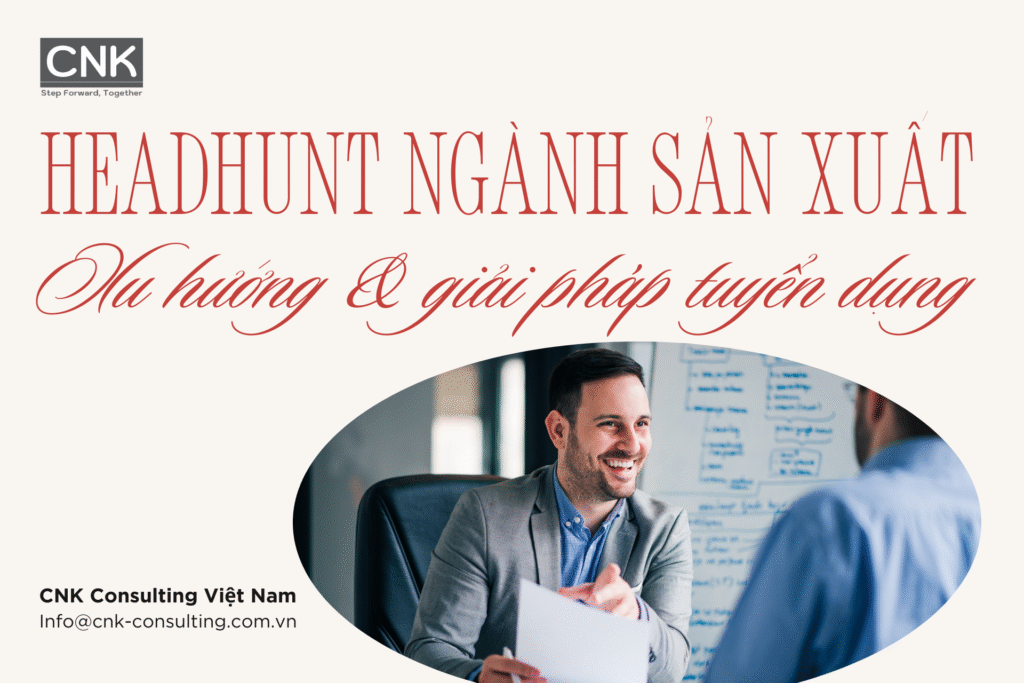
Traditional recruitment often leaves manufacturers searching for months to fill a critical role without finding the right candidate. An experienced team can help a plant run smoothly from the outset. This article explores how executive search and specialist recruitment in manufacturing help employers use resources efficiently and support sustainable growth in production output.
Manufacturing recruitment in 2025: market conditions and challenges
Executive search and specialist recruitment in manufacturing focus on identifying, attracting and selecting highly qualified candidates for management, engineering and specialist roles.
Unlike traditional recruitment, search consultants approach prospective candidates directly through industry networks, specialist recruitment channels and other targeted sources.
Manufacturing is a key driver of Vietnam’s economic growth, particularly as global supply chains shift. This growth also brings substantial workforce challenges, creating a significant gap between hiring demand and the supply of qualified talent.
>> CNK Consulting Vietnam provides specialist recruitment solutions that help manufacturers connect with highly qualified candidates quickly.
The broader picture: demand for highly skilled talent
2025 has brought a sharp rise in recruitment demand across advanced manufacturing and automation. Digital transformation and Industry 4.0 have become operational requirements, creating an urgent need for professionals with deep technical expertise and modern management skills.
- A shift towards specialist skills: Demand extends beyond production headcount to R&D engineers, automation engineers and supply chain managers with international experience.
- Growing FDI investment: Large FDI projects, particularly in electronics, automotive components and green technology, are intensifying competition for middle and senior management talent.
The main challenges in finding talent
Despite a large labour pool, manufacturers face substantial obstacles when recruiting for senior positions:
A shortage of senior engineers and operations managers
This is the greatest challenge for employers. Senior manufacturing roles require a rare combination of extensive technical experience, leadership skills and the ability to manage lean operations.
- Skills gaps: Domestic training programmes have not kept pace with new manufacturing technologies, leaving many younger candidates without sufficient practical experience.
- Passive candidates: Strong senior engineers and managers are often settled in their current roles and rarely look actively for work. Traditional methods such as job advertising struggle to reach them effectively.
Competition over pay and benefits
A limited supply of highly qualified talent creates intense competition over compensation, particularly between FDI enterprises and large employers in the same sector.
- Multinational corporations are willing to offer substantially higher salaries and attractive benefits packages, putting significant upward pressure on pay across the market.
- A growing tendency to change jobs for higher pay is making senior employee retention more difficult.
Assessing cultural fit
Successful recruitment requires both technical competence and compatibility with the employer’s working environment and core values.
- Discipline, procedures and safety are essential to manufacturing workplace culture. Technically strong candidates who disregard procedures or struggle with local leadership styles often do not stay long.
- Assessing cultural fit and interpersonal skills, including problem-solving and teamwork, requires in-depth interviews. Internal HR teams sometimes lack the experience to conduct these assessments effectively.
Manufacturing executive search: trends and strategic importance
As traditional recruitment encounters persistent obstacles, executive search has become an essential approach and a strategic tool for manufacturers seeking senior talent.
Why employers turn to executive search
Manufacturing executive search offers advantages that internal HR teams may struggle to replicate, particularly when recruiting scarce technical specialists.
Access to passive and senior candidates
Rather than posting vacancies and waiting for applications, executive search consultants identify and directly approach experienced specialists and managers who are established at competitors or other employers in the sector.
- Specialist networks: Executive search firms maintain industry relationships and databases of screened talent, enabling them to identify suitable candidates quickly.
- Effective candidate engagement: Search consultants act as employer brand ambassadors, presenting career opportunities and company culture persuasively to candidates who had not planned to change jobs.
Speed and confidentiality throughout recruitment
Manufacturers need to replace key managers and engineers quickly to avoid production disruption while maintaining confidentiality.
- Time savings: Search consultants significantly shorten the recruitment cycle through professional sourcing, screening and assessment processes.
- Strict confidentiality: When an employer needs to make a sensitive senior replacement or expand discreetly, consultants use confidential search to keep hiring information private, avoiding internal disruption and disclosure to competitors.
The roles most frequently handled by search consultants
Manufacturing search assignments focus on positions that directly influence productivity, quality and innovation.
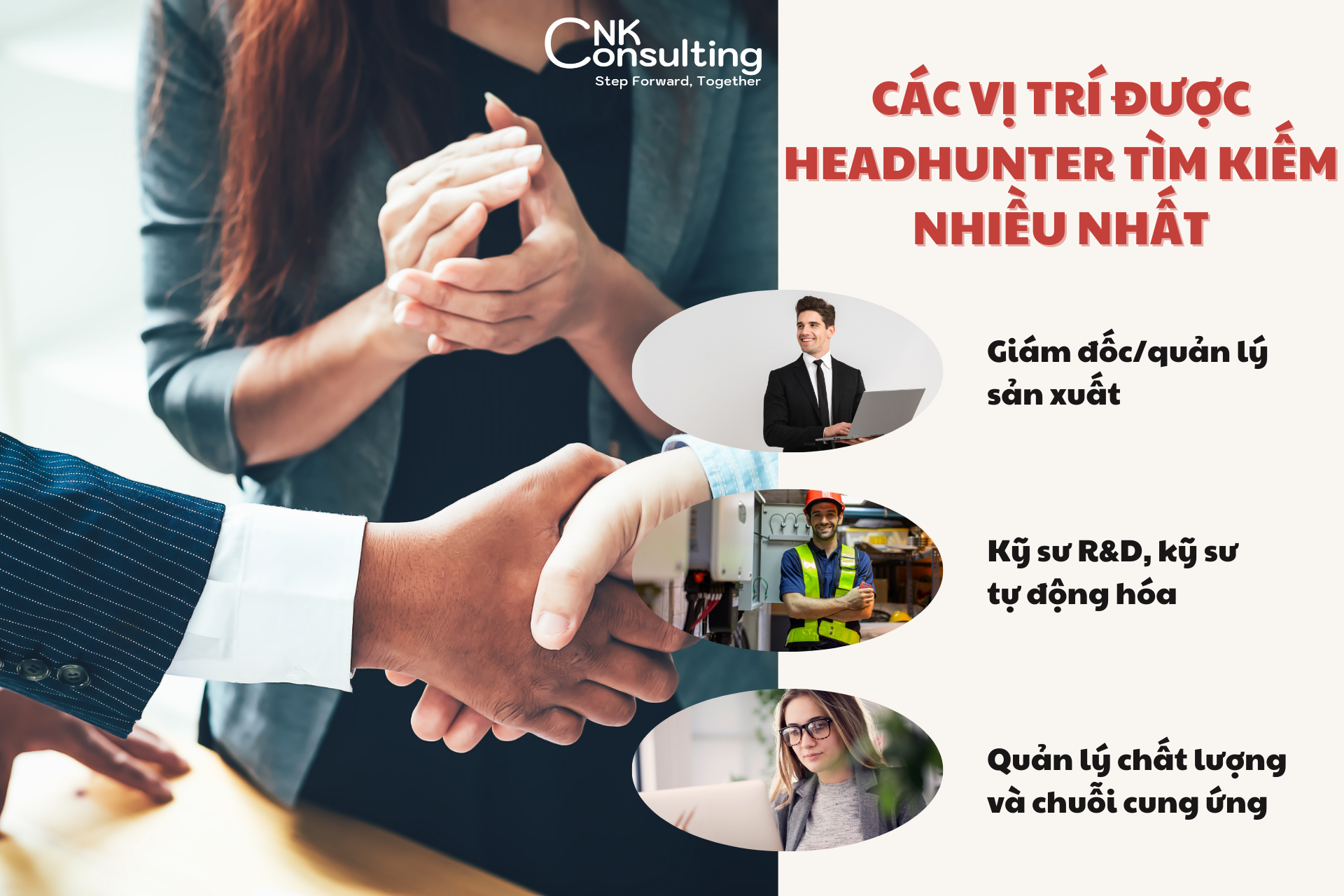
Production directors and managers
These roles are central to plant operations, with responsibility for optimising the entire production process, managing hundreds of employees and meeting output targets. Search consultants seek candidates with practical experience in:
- Managing costs and product quality.
- Applying modern operating models to reduce waste, limit defects and improve plant efficiency.
R&D and automation engineers
These roles reflect the transition to Industry 4.0. Employers need engineers who can:
- Research and develop new products (R&D).
- Programme and integrate machinery and robotic automation systems.
- Understand technologies such as IoT (Internet of Things) and big data to support smart factory operations and management.
Quality and supply chain managers
Ongoing supply chain volatility makes these specialists more important than ever:
- Quality manager: Ensures compliance with international standards and requirements (ISO, CE, FDA) and builds quality management systems designed to prevent errors.
- Supply chain manager: Optimises logistics, minimises supply disruption risks and manages warehousing efficiently.
Recruitment solutions: working with an executive search partner
Working with an executive search firm involves building a strategic partnership as well as outsourcing recruitment. To achieve the best results, employers need to understand the specialist search process and the criteria for choosing a partner.
The manufacturing executive search process
Manufacturing executive search typically follows a rigorous, structured process to help employers select the right candidate for each role.
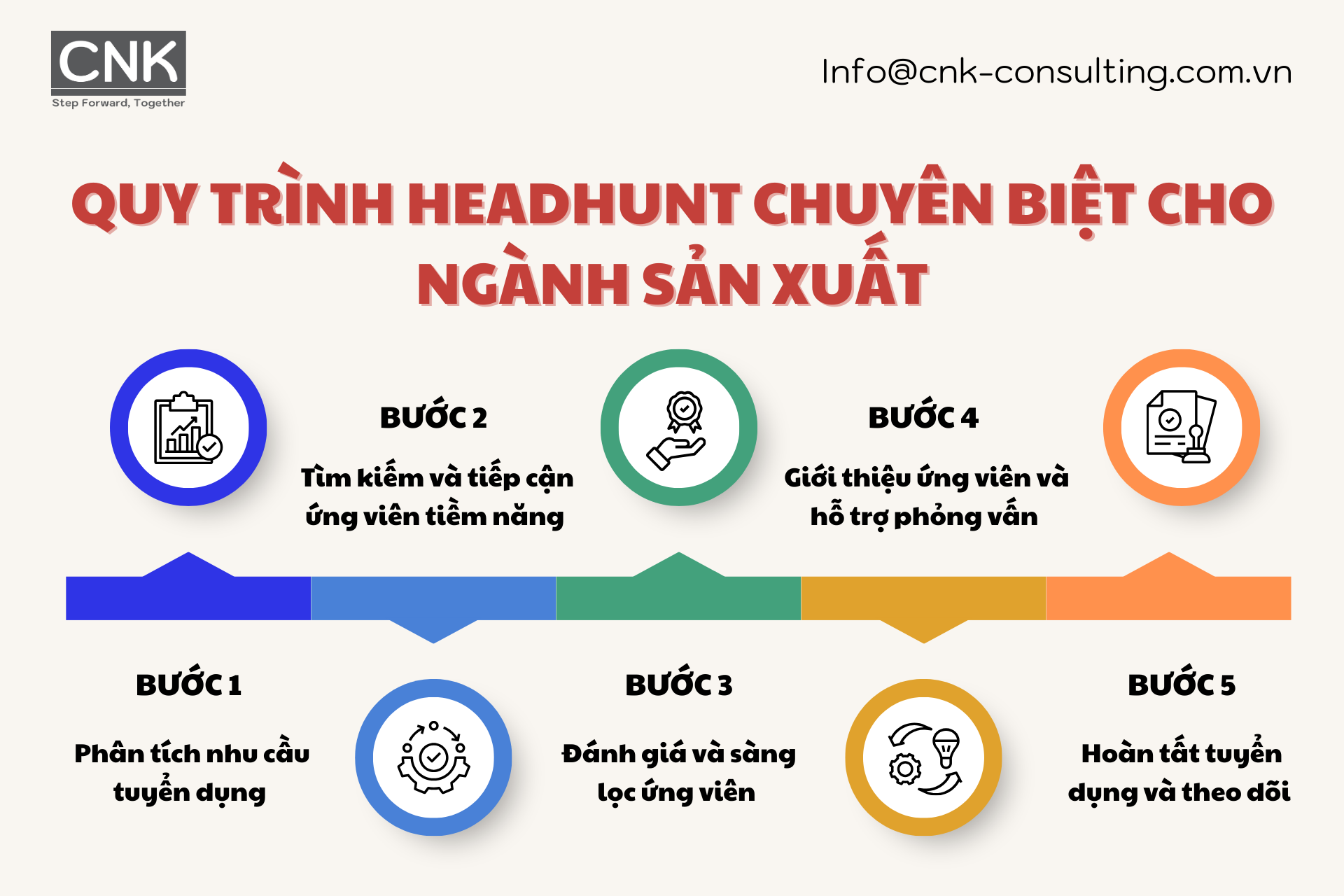
Define the hiring requirements
The employer and search firm discuss the vacancy, required technical skills, experience and development plans in detail. This establishes the foundation for an accurate candidate profile.
Identify and approach prospective candidates
Executive search and specialist recruitment consultants use sector-specific candidate databases, manufacturing industry networks and specialist channels to reach prospective candidates. This helps employers quickly connect with professionals who have the required expertise, meet the hiring criteria and are ready to join the business.
Assess and screen candidates
Each candidate undergoes detailed interviews and assessments covering technical competence, management skills and practical experience. This process ensures that only outstanding candidates are presented to the employer, improving the likelihood of a successful hire.
Present the shortlist and support interviews
Once screening is complete, the search consultant presents a shortlist to the employer. The consultant coordinates interviews, provides candidate information and advises on negotiations to ensure the final selection is the best match for the employer’s requirements.
Complete the placement and follow up
After the selected candidate starts work, the search firm continues to monitor their integration and performance. This helps the employer ensure the candidate settles in quickly, reduce hiring risks and improve manufacturing efficiency.
How to choose a credible executive search partner
Choosing the right partner is essential to getting value from an investment in executive search.
Experience and in-depth industry knowledge
Industry expertise is critical. A credible manufacturing search firm should demonstrate:
- A record of successful assignments for comparable roles, such as placing a plant director in textiles or electronics.
- An understanding of technical terminology and plant organisational structures, including the distinction between a maintenance engineer and a process engineer.
Consultants with technical knowledge
Search consultants do not need to be engineers, but they must have enough technical grounding to communicate effectively with engineering and management candidates.
- They should be able to assess candidate quality through an initial technical interview, rather than relying solely on CV keywords.
- This professional competence builds trust with senior candidates, who seek advice from specialists who understand their field.
How technology is changing manufacturing executive search
Technology is changing both production methods and the way employers find and recruit talent. Executive search firms are adopting technology to improve speed, accuracy and efficiency.
AI and big data in candidate screening
Artificial intelligence (AI) and big data analytics play an increasingly important role in streamlining talent searches.
- CV analysis: AI can scan large numbers of CVs in a database to identify specific technical terms, project experience and professional qualifications with greater accuracy than human reviewers.
- Predicting adaptability: Advanced algorithms analyse career history, job-change frequency and career progression to predict whether a candidate will succeed and stay with a manufacturing employer, reducing the risk of an unsuitable hire.
- Personalisation: Search consultants use data to tailor outreach messages around the aspects of a role or benefits package that matter most to each candidate, improving response rates among passive candidates.
The role of LinkedIn and professional networks
Manufacturing specialists often work within industrial clusters or high-tech parks. Professional social platforms and established industry networks are therefore key sourcing tools.
- LinkedIn Recruiter: This is an essential tool for identifying and approaching engineers and middle managers employed by competitors. Experienced search consultants use advanced filters to find talent against detailed criteria, such as Head of Quality, 5+ years of experience, automotive sector.
- Building professional communities: Many search firms organise Industry 4.0 events and seminars to develop and maintain relationships with industry specialists. This gives them an established network of highly qualified candidates when hiring needs arise.
Manufacturing executive search versus traditional recruitment: costs and effectiveness
Manufacturing employers typically weigh 2 approaches: engaging an executive search firm or recruiting through traditional internal channels. Each has distinct costs and outcomes that directly affect hiring time, candidate quality and recruitment success.
Manufacturing executive search typically requires a higher initial investment than traditional recruitment. That fee covers a comprehensive service: defining hiring requirements, identifying and screening qualified candidates, supporting interviews and advising on negotiations.
This gives employers faster access to suitable talent, shortens the selection process and reduces the risk of an unsuccessful hire.
Traditional recruitment has lower upfront costs but requires employers to invest more time and effort in advertising, screening, interviewing and selecting candidates. The risk of choosing an unsuitable candidate is higher, bringing indirect costs such as training, cultural integration and replacement hiring.
Manufacturing executive search helps employers recruit qualified managers and engineers quickly and accurately. It saves time, reduces overall recruitment costs and improves candidate selection compared with traditional methods.
CNK: a trusted manufacturing executive search partner
Manufacturers seeking to recruit qualified managers and engineers quickly and effectively can work with CNK Consulting Vietnam, a trusted provider of executive search and specialist recruitment in Vietnam. CNK supports the full recruitment process, from defining hiring requirements and sourcing and screening candidates to presenting suitable professionals.
With extensive industry experience, CNK ensures employers can access highly skilled candidates who meet their technical and management requirements. CNK’s services help employers save time, control costs and improve hiring decisions.
Conclusion
Manufacturing executive search helps employers recruit faster, reach qualified candidates and manage recruitment costs. To find the right people, explore the services available from CNK Consulting Vietnam, a leading, trusted executive search firm.
CNK Consulting Vietnam
Expanding your network of qualified talent
Hotline: +84 369 882 579
Email: info@cnk-consulting.com.vn
Address: 12BT6 Thanh Bình Garden, No. 3 Nguyễn Cảnh Dị, Định Công Ward, Hanoi, Vietnam
References:
- Deloitte: 2026 Manufacturing Industry Outlook (Analysis of global manufacturing workforce shortage trends).
- Randstad: Manufacturing recruitment: challenges and opportunities. (Workforce shortages are forcing employers to adopt direct search rather than wait for candidates to apply).
- Talentnet Vietnam: Top 4 HR Trends in Manufacturing Industry Driving Business Success (4 leading HR trends in manufacturing that drive business success).