


A candidate rejection email communicates a hiring decision and shows respect for the candidate. A thoughtful message helps employers protect their reputation and provide a positive experience, even when an application is unsuccessful. This guide brings together candidate rejection email templates and conversation scripts to help you handle these exchanges professionally.
What is a candidate rejection email?
Defining a candidate rejection email
A candidate rejection email is a message from an employer or HR team informing a candidate that their application has been unsuccessful or that they will not progress to the next stage. It closes the hiring process professionally, shows respect for the candidate and helps build a positive employer brand.
Candidates assess employers through their application experience as well as salary and benefits. A professional, courteous and thoughtful rejection email therefore supports the employer brand and reflects sound HR practices.
How to use rejection email templates effectively
Recruitment campaigns often involve a large number of unsuccessful candidates, so writing each email from scratch can take considerable time. Prepare templates for different situations, such as rejection after CV screening or after an interview.
Adapt each template to the role, the candidate and your company’s communication style. This saves time while keeping recruitment correspondence professional and personal.
Why thoughtful, professional rejection emails matter
Many employers regard rejection emails as an unnecessary, time-consuming task. Yet in a competitive talent market, how you turn down a candidate matters almost as much as how you welcome a new employee. A carefully written rejection email is both a courtesy and an investment in long-term business relationships.
The importance of the candidate experience
The candidate experience covers every interaction with a company, from submitting an application to receiving a final decision, including the interview process. Taking the time to send an email shows respect and meets a basic expectation: more than 80% of candidates want a response even when they are unsuccessful. How you communicate rejection also directly affects your ability to maintain the relationship. A candidate who is not suitable today may be a strong prospect for another role in the future.
Building a positive employer brand
Your employer brand reflects how candidates perceive your company. A professional, sincere rejection email helps establish a reputation for fairness and professionalism. Ignoring candidates or sending a careless response may prompt them to share negative experiences on social media or employer review platforms, seriously damaging your reputation as an employer.
How negative feedback affects company reputation
In the rapidly evolving Industry 4.0 era, reports of a poor recruitment experience can spread quickly. An insensitive response or complete silence can damage a company’s reputation, weaken its credibility and reduce its ability to attract talent. A professional rejection email, however, helps reinforce a positive impression among candidates.
Candidate rejection email templates
Tailor rejection messages to the candidate’s stage in the hiring process. A response to an initial application should differ from a message to someone who has invested time and effort in several interview rounds.
Rejection email after an application, before interview
Send a prompt, courteous response after reviewing an unsuccessful application. Thank the candidate for their interest and explain that their application does not meet the selection criteria.
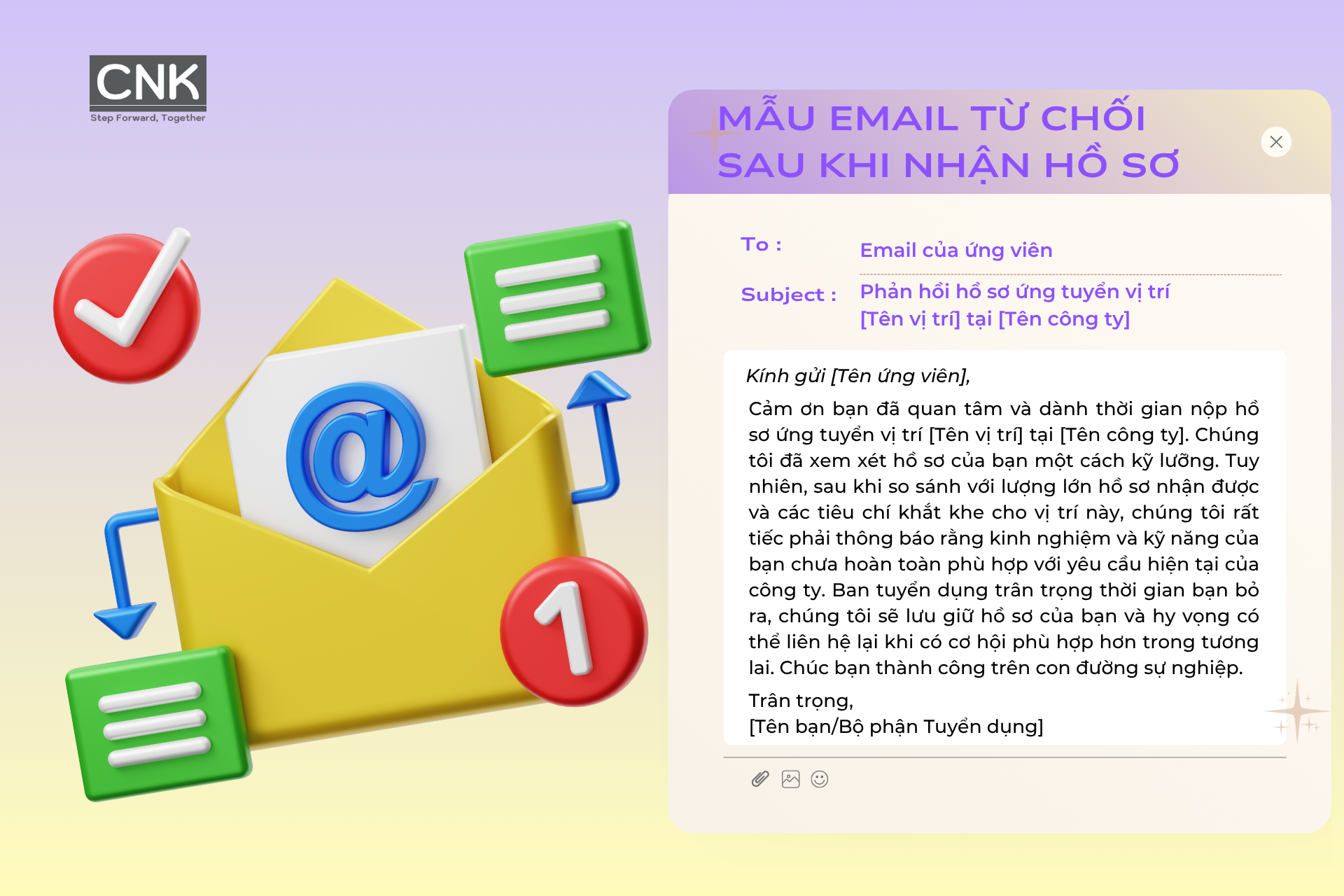
Rejection email after the initial interview: a strong candidate whose experience does not match the role
After the initial interview, the candidate has already invested time in meeting your team. The rejection email should therefore acknowledge the strengths that impressed you during the conversation.
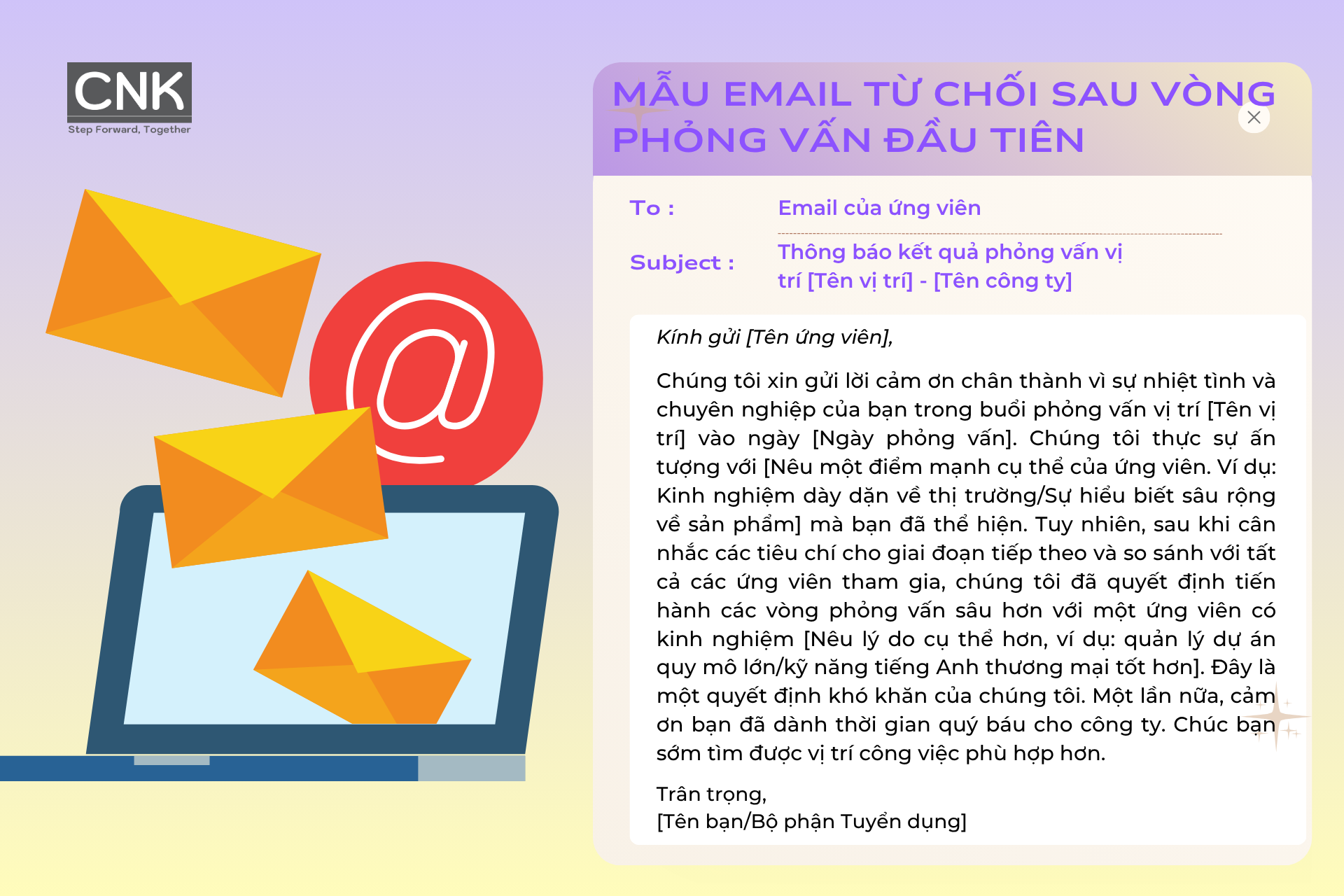
Rejection email after several interview rounds
Candidates who have completed several interview rounds often have high expectations, making rejection at this stage particularly sensitive. The email should be respectful and sincere, while encouraging continued contact about suitable future opportunities.
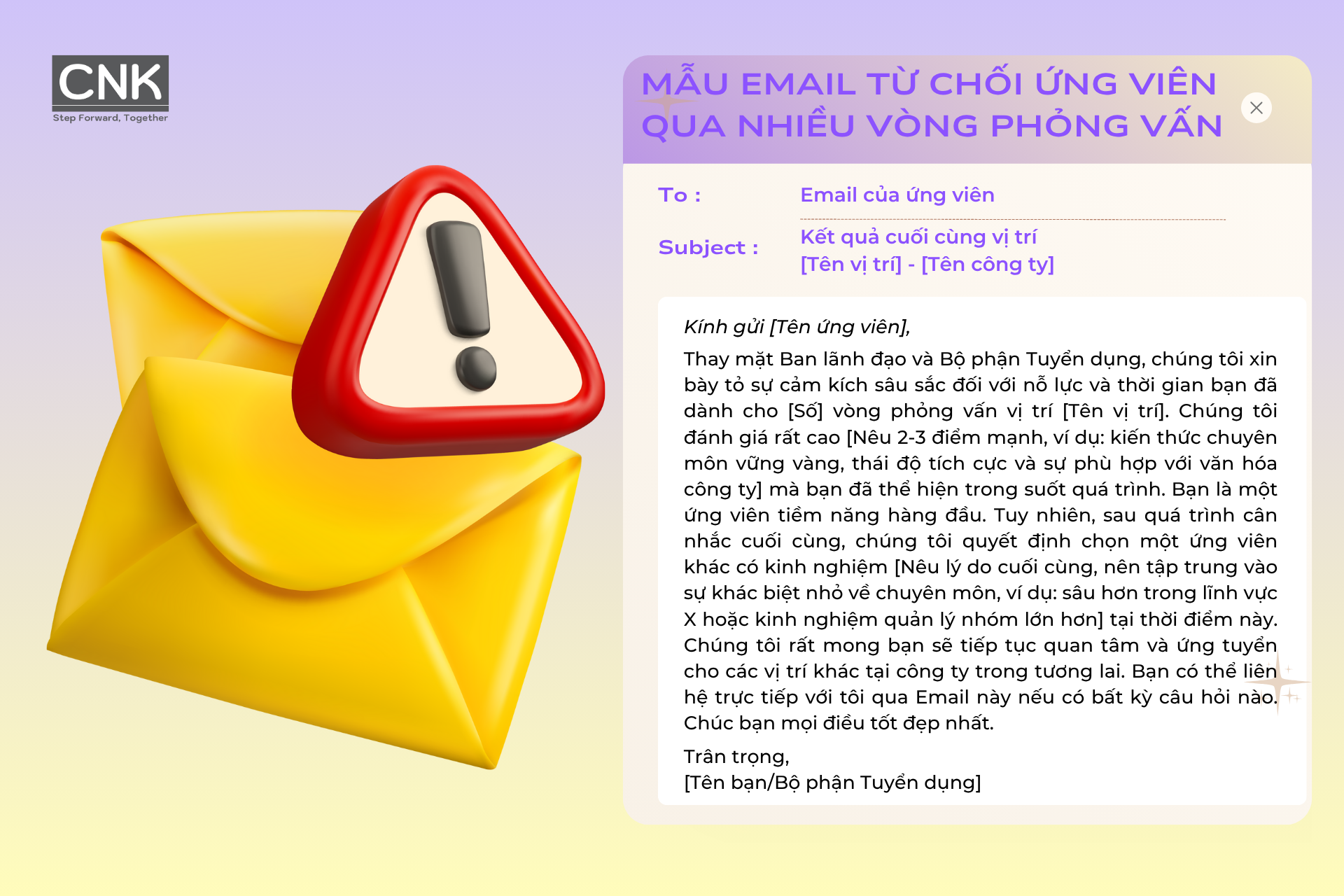
Email following an unsuccessful probation period
A decision not to continue employment after probation calls for transparency and specific performance feedback to help the individual improve. Usually, communicate the decision in person or by phone, then follow up with a formal email.
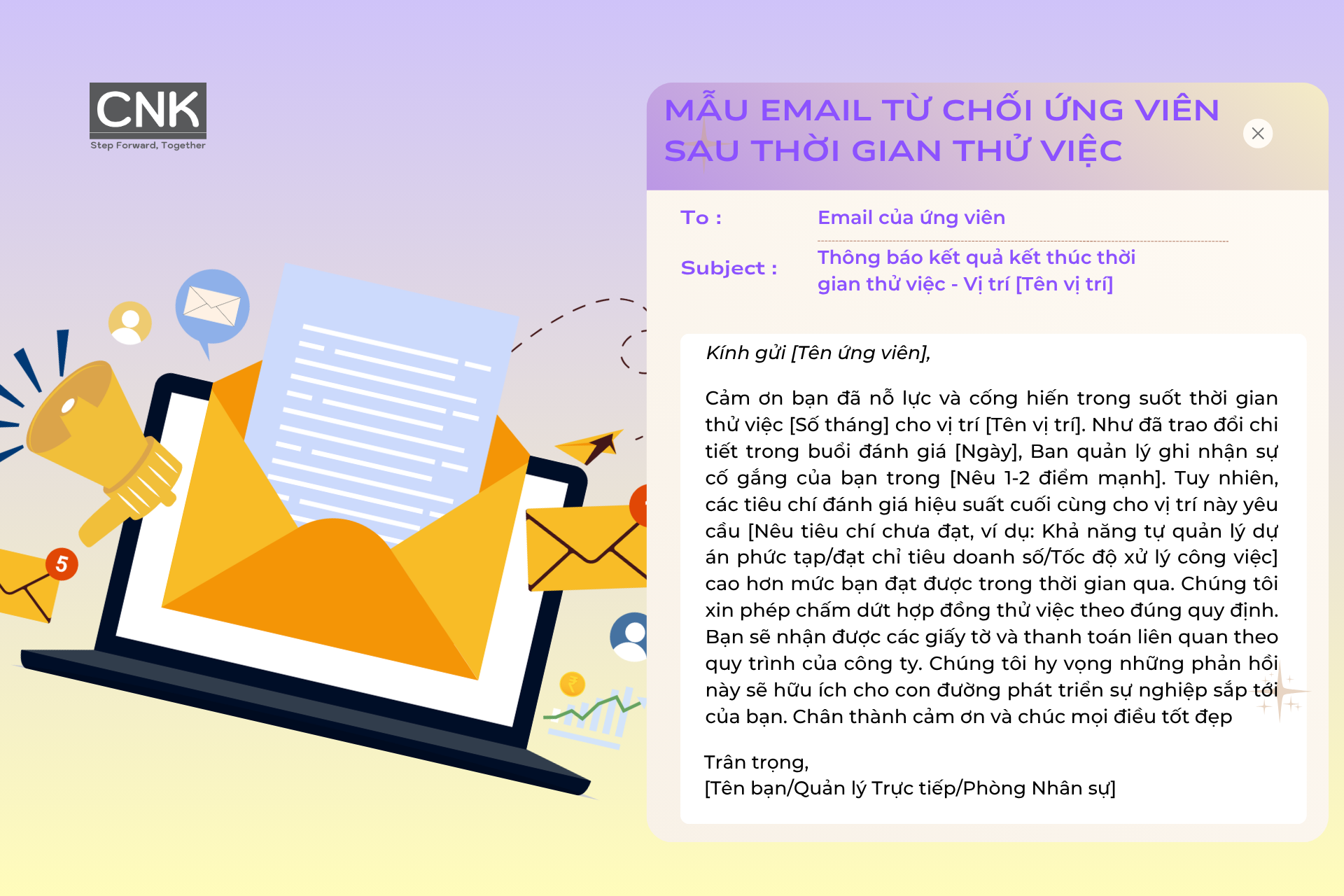
Scripts and principles for communicating rejection
Communicating rejection involves more than sending a letter: it requires a thoughtful approach to maintaining goodwill. As with inviting a candidate to interview, tact and professionalism matter. Your choice of email or phone also directly influences how the candidate perceives your company.

Core principles for writing a rejection email
An effective rejection email follows a basic 3-step structure to communicate the outcome clearly and sensitively:
- Thank the candidate: Open with sincere thanks for their time, interest and effort. This demonstrates the company’s respect for them. For example: “Thank you for the valuable time you spent interviewing with us.”
- Give a brief explanation: State the outcome and explain the reason concisely, focusing on the role’s requirements rather than the candidate’s weaknesses. For example: “We have selected a candidate with more in-depth experience in X.”
- Offer good wishes and address future opportunities: Close with your best wishes and ask to retain their details if they may be suitable for other roles. For example: “We wish you every success in your career and hope to have an opportunity to work together in the future.”
Should you communicate rejection by email or phone?
Choose between email and phone based on the extent of your interaction during the hiring process and the candidate’s potential suitability for future opportunities.
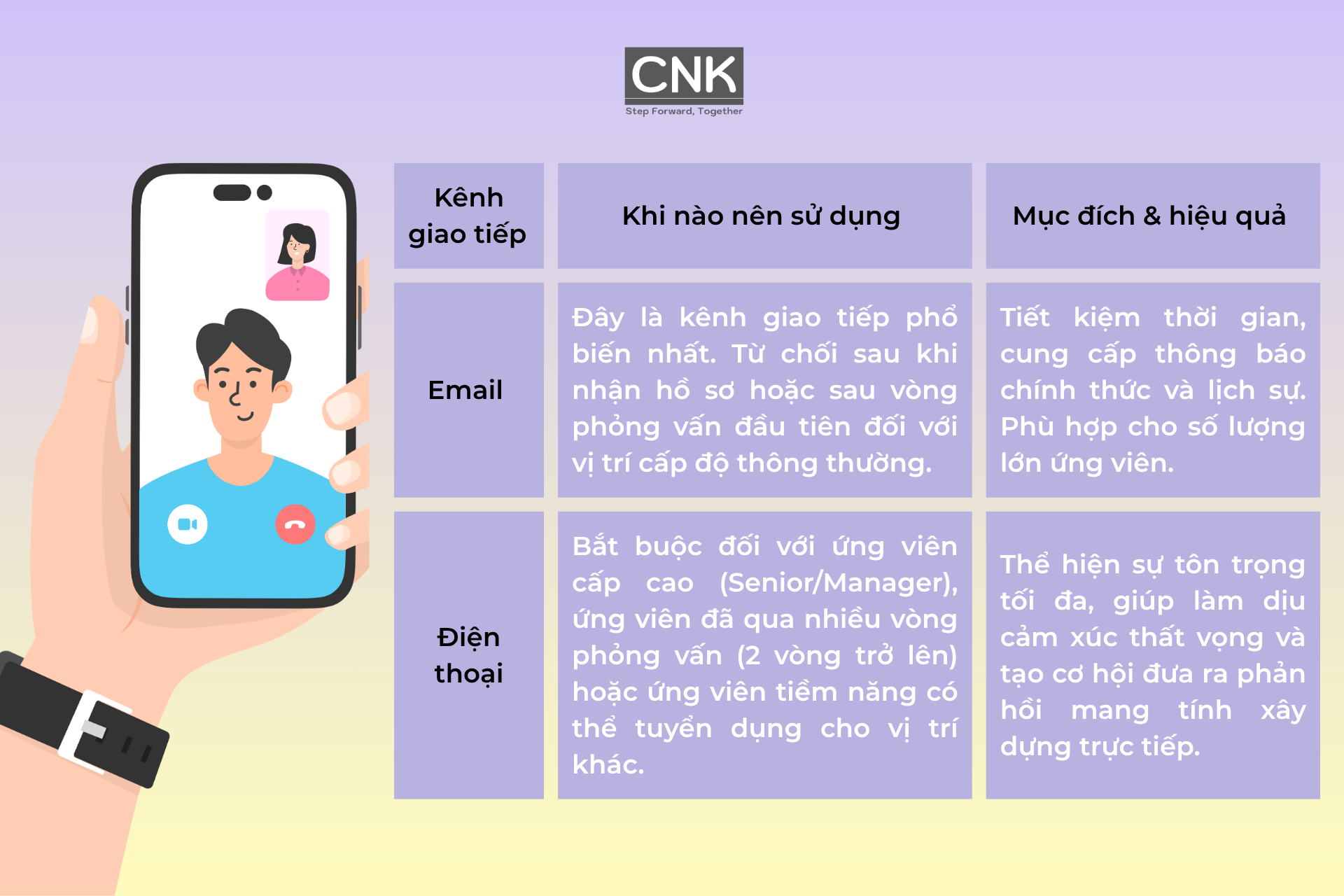
Phone script for senior candidates or candidates with future potential
For senior candidates or those with future potential, employers should prioritise a phone call. Prepare a script to help communicate the decision sensitively and professionally:
- Introduce yourself and thank the candidate: State your name and role, then acknowledge the candidate’s effort throughout the hiring process. For example: “Hello [Candidate name], this is [Name] from the recruitment team at [Company name]. Thank you for the time and effort you have invested in our selection process. We appreciate you sharing your experience and perspectives with us.”
- Communicate the decision: Be direct and professional so the candidate is not left waiting anxiously for the outcome. For example: “After careful consideration, we have decided to proceed with another candidate for this role. It was a difficult decision, as we see considerable potential in your application.”
- Briefly explain the reason: Give a concise, objective explanation, focusing on small differences in suitability rather than personal shortcomings. For example: “The selected candidate has more in-depth experience in [specific area/skill], which is a key requirement for this role. That does not diminish the value of your experience or the capabilities you demonstrated.”
- Offer constructive feedback: Where appropriate, ask whether the candidate would welcome further feedback to support their career development. For example: “If you would find it helpful, I would be happy to share some feedback from the interview panel that you could use when pursuing future opportunities.”
- Close the call: Reaffirm your appreciation, express your interest in staying in touch and offer your best wishes. For example: “We appreciate everything you contributed to this process and hope there will be an opportunity to work together in a more suitable role in the future. We wish you every success with the next steps in your career.”
How to give constructive feedback tactfully
Constructive feedback is the most valuable support you can offer, turning rejection into an opportunity for the candidate to learn.
- Focus on behaviour and skills, rather than personality: Instead of saying, “You lack confidence,” say, “During your presentation, we felt you could strengthen your ability to persuade and present data more clearly.”
- Use the “sandwich” method: Start with a strength as the opening slice of bread, discuss an area for improvement as the filling, and finish with encouragement as the closing slice.
- Provide feedback only when requested: Ask first: “Would you like us to share some brief feedback that may help with future opportunities?” If the candidate agrees, discuss it privately.
What to avoid when writing a rejection email
Handling rejection thoughtfully preserves goodwill and demonstrates professional, transparent communication. A respectful approach strengthens your company’s credibility and helps minimise misunderstandings and unwanted risks.
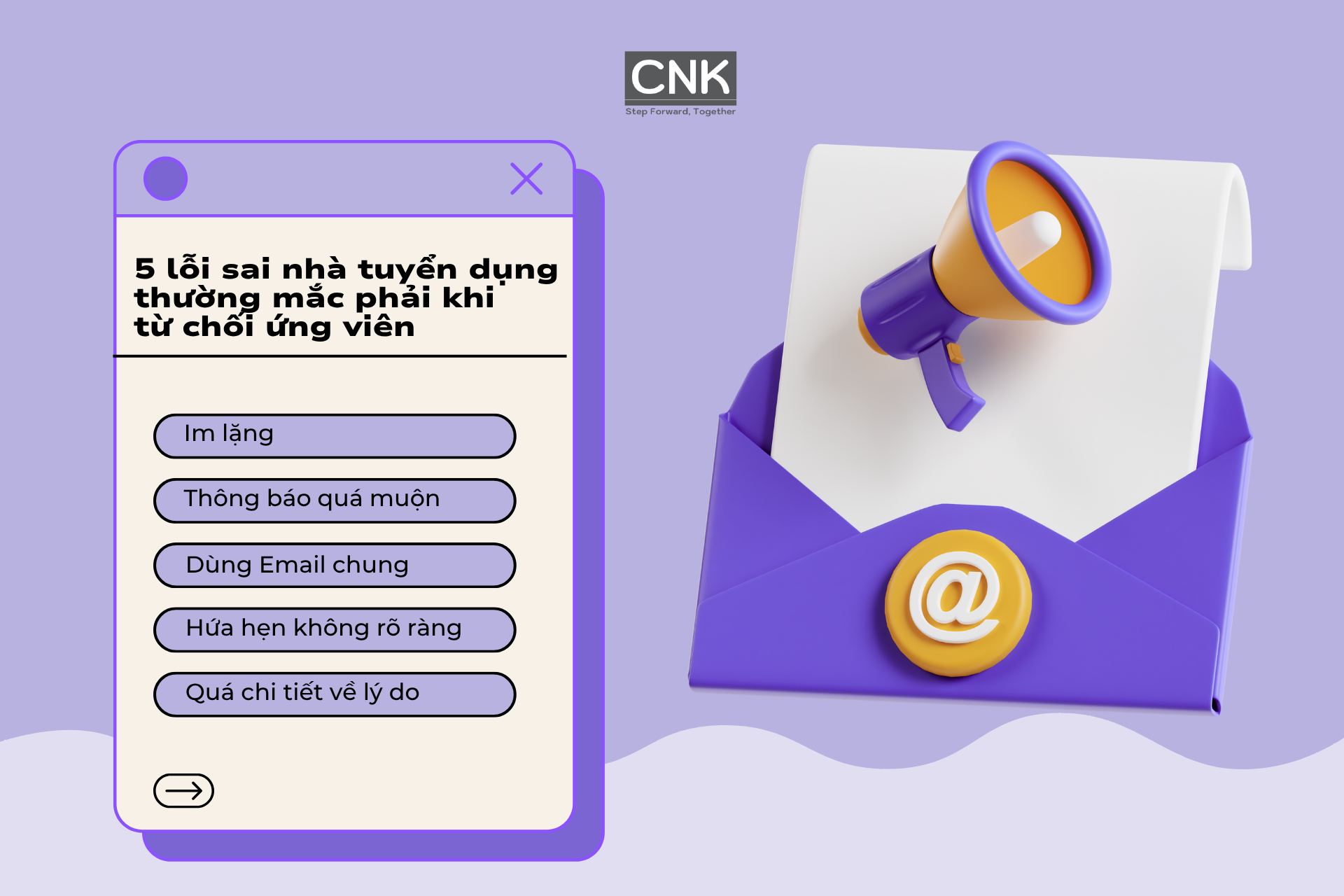
5 common mistakes employers make when rejecting candidates
To maintain professional standards and protect both the candidate experience and your company’s reputation, avoid these 5 mistakes:
- Remaining silent: Failing to respond after a candidate has spent time applying or interviewing is seen as disrespectful and unprofessional.
- Delaying the response: Sending a rejection email weeks or months later leaves candidates feeling forgotten and can cost them opportunities to pursue other jobs. Respond within 1 week of the company’s final decision.
- Sending a generic email: Templates that omit the candidate’s name or the role they applied for can make them feel undervalued.
- Making vague promises: Avoid statements such as “We will be in touch soon” unless you have a specific intention to follow up, as they create false hope. Instead, write: “We will retain your details and consider you for suitable future roles.”
- Overexplaining the decision: Giving too many detailed, personal reasons can sound critical, upset the candidate and lead to an argument.
>> Read more: Interview question templates for HR teams across all roles
Phrases and reasons for rejection to avoid
To maintain professional standards and comply with employment law, employers should avoid giving reasons for rejection that relate to sensitive, legally protected characteristics:
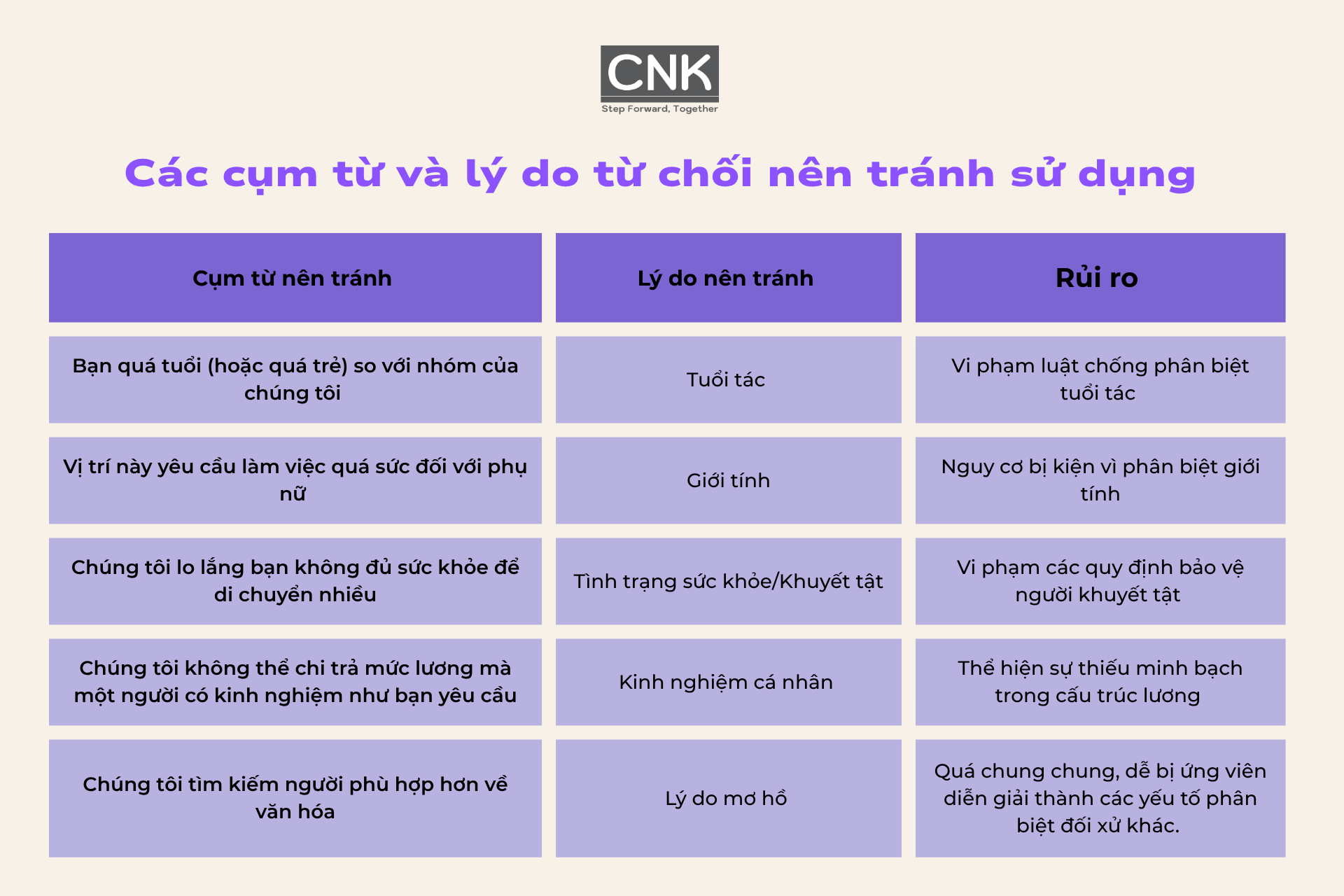
As a general rule, keep discussions focused on gaps in professional skills or specific experience directly relevant to the job’s responsibilities.
Managing records of unsuccessful candidates
Retaining records of unsuccessful candidates is an important part of legal compliance and building a talent database for future hiring.
- Legal compliance: Candidate records contain personal information, so companies need clear policies on retention periods and data handling. Retain records for a reasonable period and seek the candidate’s permission to keep their details for future roles.
- Building a talent pool: Retaining details of capable candidates who are not currently suitable is an effective way to build a strong talent pool.
- Organisation: Categorise records by experience level or skills, using categories such as high potential or development needed, so relevant candidates are easy to find when a new role opens.
>> Read more: 10+ effective free and paid candidate sourcing channels
Conclusion
A candidate rejection email is an opportunity to strengthen your employer brand while completing an administrative task. Approach it as a sincere, professional message that can leave a lasting positive impression, even when the decision is difficult to communicate.
How you turn down a candidate today may determine whether they become a customer, refer talent to your company or join you as a colleague in the future. Investing in professional rejection communications supports your company’s reputation and sustainable growth.
CNK Consulting Vietnam
Hotline: +84 369 882 579
Email: info@cnk-consulting.com.vn
Address: 12BT6, Thanh Bình Urban Area, No. 3 Nguyễn Cảnh Dị, Định Công Ward, Hà Nội
Struggling to fill a role? Explore CNK Consulting’s executive search and specialist recruitment services for hard-to-fill positions in Vietnam.
Receive workforce market updates
Recruitment, talent market and workforce development updates from CNK.