


Struggling to reach qualified candidates? Explore 10+ effective, reputable free and paid sourcing channels that help employers manage recruitment costs and attract the right talent.
Today’s recruitment challenges and strategies
HR teams face pressure to find qualified candidates while keeping recruitment within budget. Managing costs and choosing the right recruitment channels are therefore key priorities.

HR’s biggest challenge: balancing cost and candidate quality
Vietnam’s recruitment market offers employers many opportunities to reach talent, particularly for critical IT and senior leadership roles. HR leaders need to find the right people at an appropriate cost to strengthen competitiveness and support sustainable growth.
Many small and medium-sized enterprises (SMEs) have limited recruitment budgets, making it difficult to rely entirely on paid options such as executive search or VIP recruitment packages. HR teams therefore need free or low-cost candidate sources that deliver results, allowing their employers to compete for talent without exceeding their budgets.
>> Read more: Interview question templates for HR teams across all roles
Candidate sourcing strategy: combine complementary channels
A recruitment strategy that uses multiple channels is essential to balancing cost and candidate quality. Recruitment teams should source candidates proactively through a combination of:
- Free channels: Social media, basic job board features and internal databases allow employers to reach candidates and find profiles at no charge. These channels provide a foundation for controlling costs and building a lasting employer brand.
- Paid channels: Used strategically, these channels accelerate recruitment and help employers reach specialist candidates or fill roles that are difficult to recruit for.
6+ of the most effective free candidate sourcing channels
Recruitment does not always require a substantial budget. Used well, free channels can help recruitment teams reach qualified candidates. The following sources offer practical options to explore and adapt to your hiring needs.
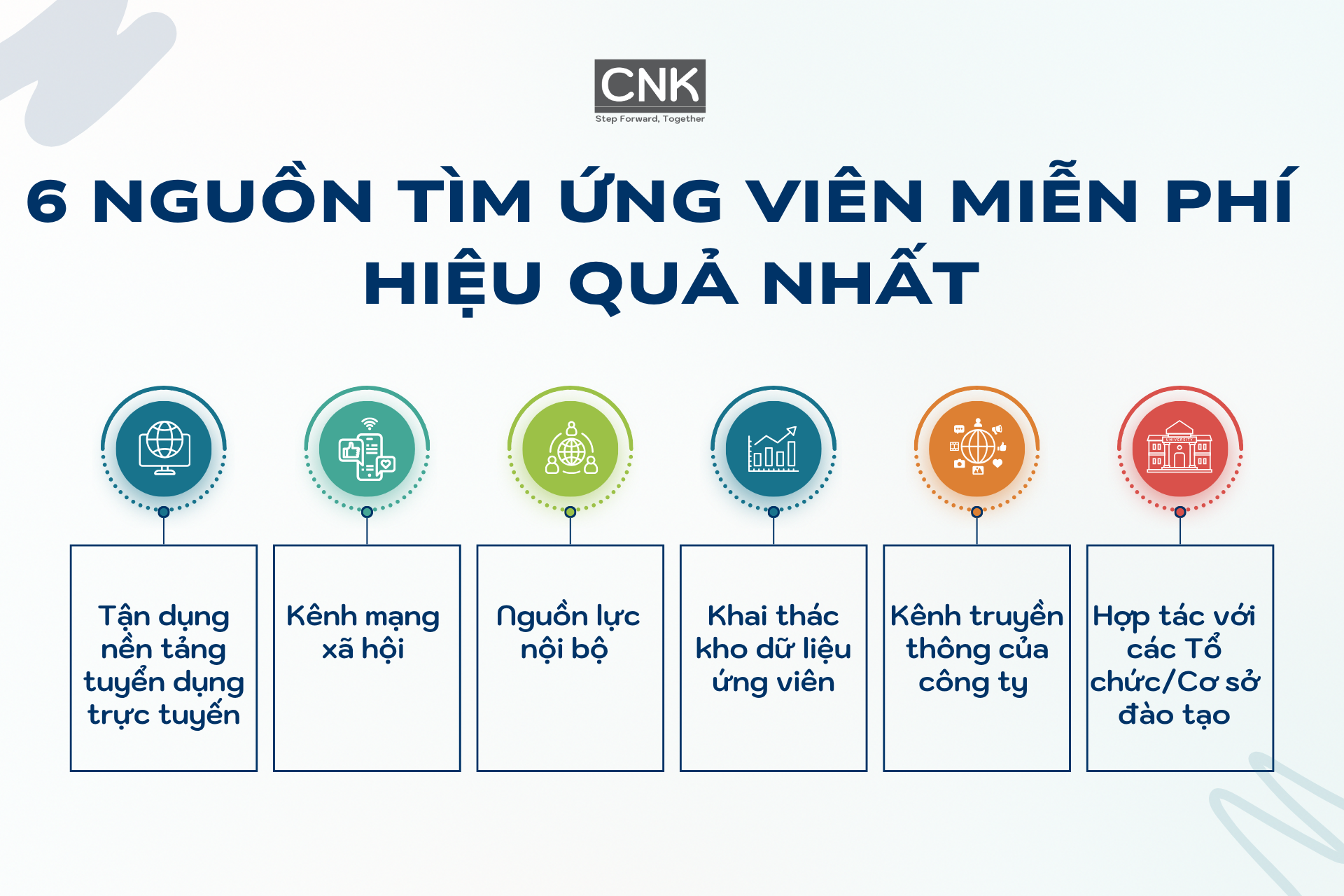
Use the free basic features of online recruitment platforms
Major recruitment websites offer useful free basic features alongside their paid services, helping employers find suitable candidate profiles.
Websites offering free candidate profile searches and limited free job postings include:
- TopCV: Offers free job postings and an extensive source of CVs, particularly from younger candidates, students and people starting their careers.
- Timviec365, TimViecNhanh, MyWork, Vieclam24h: Provide large candidate databases and basic filters, allowing employers to access a substantial number of profiles without paying upfront.
- Ybox, Internships Jobs: Ideal channels for sourcing interns, freelance contributors and candidates with limited experience.
To help a free job advertisement stand out, recruitment teams need to invest in its content. A clear title, a job description (JD) with relevant professional keywords, and an authentic, engaging tone can improve visibility, attract more views and increase the likelihood of finding suitable candidates.
Reach candidates for free through social media
Facebook’s large user base and high engagement have long made it a valuable recruitment channel. Recruitment teams can reach both general and specialist candidates by choosing relevant communities and using an appropriate approach.
- Post in recruitment groups: Select reputable, active groups. These are particularly suitable for recruiting general staff, temporary workers, and candidates for sales or service roles.
- Post in professional groups: To find candidates with specialist expertise, use communities such as marketing associations, accounting communities and IT developer groups. Post vacancies proactively or identify potential candidates through their contributions to discussions.
As a professional networking platform, LinkedIn brings together specialists, managers and senior executives. It helps employers find qualified candidates and build a lasting employer brand.
- Free direct sourcing techniques: Use LinkedIn’s advanced search filters, including job title, company and skills, to identify candidates. Then connect proactively and send personalised messages. The platform has a strong concentration of qualified senior professionals.
- Create recruitment content: Share posts about company culture, achievements and career opportunities on personal profiles or company pages to attract passive candidates.
Internal talent and employee networks
Your existing workforce is the most promising and sustainable source of potential candidates. Established employees usually understand the company’s culture and working practices and can adapt easily, significantly reducing recruitment costs and the risk of a poor fit.
- Employee referral programmes: These programmes draw on employees’ networks, including friends and family, to identify suitable candidates without advertising vacancies. Referrals are among the fastest ways to find candidates. Referred candidates often fit the company culture well and stay longer. Referral bonuses also cost much less than recruitment services or advertising.
- Internal recruitment, also known as internal mobility: This approach allows existing employees to move between roles, departments or business units within the same organisation to develop their careers. It helps employers make better use of their workforce while strengthening engagement and retention.
Revisit your existing candidate database
Previous applicants are an often overlooked source of talent. A well-managed candidate database can save recruitment teams time and money while helping them find suitable candidates quickly.
- Reconnect with previous candidates: Establish and maintain an applicant tracking system (ATS) to store and categorise profiles from earlier recruitment campaigns, including candidates who were unsuccessful or unsuitable at the time. Reconnecting offers a quick, free way to find people who have already been through an application process.
- Explore referees’ networks: During reference checks, you can tactfully ask referees about other potential candidates within their professional networks.
Use your company’s communication channels
An employer’s own communication channels can attract talent alongside external recruitment sources. A professional, consistent employer brand helps candidates see both available opportunities and reasons to build a long-term career with the company.
- The careers page on your company website: A professional careers page with comprehensive information about culture and benefits strengthens your employer brand. Candidates who actively seek out this page are often interested in the company and well suited to it.
- Your company social media page or blog: Regularly share content about the working environment, internal activities and employee achievements.
Partner with educational and training institutions
Students and trainees at educational institutions and training centres provide a young, enthusiastic talent pool willing to learn. Partnerships give employers early access to emerging talent and establish lasting relationships that support future recruitment.
- Universities, colleges and vocational training centres: Build partnerships with student affairs departments to recruit interns and recent graduates, particularly in engineering and information technology (IT).
- Job fairs and workshops: Attend job fairs or organise small workshops at universities. These events allow recruitment teams to meet potential candidates and collect CVs directly at little or no cost.
How to make free job advertisements more effective
Posting on free recruitment channels will not deliver results if the advertisement fails to engage and persuade potential candidates. To find suitable candidates as quickly as possible through free channels, employers should focus on the following areas:

>> Read more: A comprehensive strategy for attracting and retaining talent
Improve your job advertisement content
Your advertisement’s content influences whether candidates notice and click on it. It also affects how Google evaluates, ranks and displays job postings published on free channels such as LinkedIn posts and Facebook groups.
Use the 3-second rule to write an engaging headline
The 3-second rule suggests that you have just 3 seconds to capture a candidate’s attention as they scroll through hundreds of advertisements. Highlight these 3 elements:
- A clear job title: Use a standard title that candidates can easily search for. For example, advertise a sales role as “B2B Sales Specialist” rather than “Prospect Hunter”.
- Salary: Salary is the most important screening factor. Include a salary range or an attractive bonus package. For example: “Urgently hiring: Backend Developer (salary up to $1500)”.
- A key benefit: Highlight a distinctive benefit, such as flexible hours or the option to work from home. For example: “General Accountant (work from home 2 days/week)”.
Show candidates the benefits of joining
Strong candidates look for opportunities to develop their careers. Instead of listing 10 rigid job requirements, shift the emphasis towards what the company can offer them.
For example, replace “Minimum 3 years of Java programming experience required” with “You will play a key role in a digital transformation project, develop your expertise in microservices architecture and work with the latest Java technology”.
Include relevant keywords that candidates use in their searches
When searching for jobs on Google or social media, candidates often use phrases that describe what they want from a role. Incorporating these phrases into your job description helps the advertisement rank higher and attract the right audience.
- Flexible working arrangements: “Remote working”, “flexible working hours”.
- Development opportunities: “Structured training”, “career progression”, “1-1 mentoring”.
- Working environment: “Young team”, “dynamic workplace”, “no workplace drama”.
- Benefits: “On-site gym/yoga studio”, “premium health insurance”.
Improve the candidate experience
A positive candidate experience is a core recruitment responsibility and a free way to build a professional employer reputation. A poor experience can deter many potential candidates as negative feedback spreads.
- Response speed matters. Apply a “24-hour rule” by sending an automated or semi-automated acknowledgement within 1 day of receiving an application. Even when a candidate is unsuitable, send a personalised, considerate and constructive rejection email, with wording such as “We will keep your profile on file for future opportunities”. This helps maintain goodwill and can encourage positive perceptions of the company.
- Standardise the interview process to ensure professionalism and transparency. Tell candidates in advance how many rounds to expect, who will attend, how long the interview will take and what it will cover. Respect their time by starting promptly or notifying them of delays as soon as possible. Communicate the outcome within the promised timeframe to build trust and reinforce your reputation as a reliable employer.
These practices help free job advertisements stand out, attract the right candidates and provide a positive experience that supports successful hiring.
Effective paid candidate sourcing channels
Paid channels complement free sources by helping employers reach qualified candidates faster, reduce CV screening time and improve recruitment effectiveness. They are suitable for senior appointments, roles requiring specialist expertise and rapid workforce expansion.

Paid recruitment platforms and premium services
Major recruitment websites such as VietnamWorks, CareerBuilder and JobStreet are large online employment platforms with millions of candidate profiles across many professions. These widely used channels are particularly suitable for employers seeking broader reach and faster hiring across a range of roles.
- VietnamWorks: Known for its network of mid-level and senior candidates, intelligent profile filters and flexible packages covering job postings, CV searches and employer brand advertising.
- CareerBuilder: Its strength in employer brand promotion makes it suitable for companies seeking greater visibility and candidates across different sectors.
- JobStreet: Well regarded for international recruitment, connecting employers with candidates across the Asia-Pacific region.
Employers should prioritise major job boards when recruiting at volume, filling multiple roles simultaneously or seeking quick access to a broad candidate pool across industries.
Executive search and specialist recruitment services
Many employers use executive search and specialist recruitment services to hire senior leaders, scarce specialists or candidates with specific capabilities. Search consultants proactively approach suitable candidates who are not actively looking for a new role, extending the search beyond incoming applications. Search firms typically offer:
- Exclusive networks of qualified candidates, including professionals currently employed by other companies.
- Consultants with a strong understanding of the labour market who can assess employer requirements and recommend suitable candidates.
- Rigorous screening processes that reduce the risk of a poor hire and improve hiring success rates.
International recruitment platforms for employers
For employers expanding into international markets or seeking senior talent, paid international recruitment tools are a necessary investment. These platforms provide quality candidate data and paid packages that give vacancies greater visibility among relevant audiences. Key tools include:
- LinkedIn Recruiter: LinkedIn’s premium recruitment tool gives employers access to its entire global candidate database. Key features include advanced search filters, direct emails to candidates and recommendations for suitable profiles. It is an ideal option for employers recruiting managers, specialists or international candidates.
- Indeed: Alongside its free version, Indeed offers “Sponsored Jobs”, which give job advertisements greater prominence in search results and improve their reach among qualified candidates. This suits employers seeking to hire quickly or recruit across multiple countries.
- Glassdoor: In addition to job postings, Glassdoor offers paid packages that help employers promote their employer brand, gain greater visibility in search results and attract candidates looking for a transparent, reputable workplace.
Free and paid recruitment: choosing channels for your hiring needs
Free channels provide a foundation, but paid recruitment can be a necessary and effective investment when specific hiring challenges arise. Paid channels complement that foundation and accelerate recruitment.
3 situations where employers should use paid recruitment
Consider allocating a recruitment budget when facing 1 of these 3 situations:
- Hiring for senior, specialist or scarce roles: Candidates for critical positions, including directors, department heads and specialists, are often not actively searching on free channels. They need a discreet, professional approach. Executive search services or premium LinkedIn Recruiter packages can help employers reach them.
- Recruiting at volume under tight deadlines: When many hires are needed quickly, free channels cannot deliver the required speed and volume of applications. Paid posting packages on leading job boards or targeted Facebook/Google advertisements are necessary to achieve broad reach quickly.
- Reaching experienced passive candidates: Passive candidates have stable employment but may move for a better opportunity. They do not spend time searching recruitment groups. Paid channels let employers reach them through targeted social media advertising or advanced search tools for direct outreach.
When employers should use free recruitment channels
- Filling general roles at volume: Roles such as sales assistants, customer service staff, receptionists and interns typically have large candidate pools. Posts on Facebook, Zalo, professional groups and forums can quickly attract many applications.
- Working with a limited budget: Cost control is a priority for start-ups and small and medium-sized enterprises (SMEs). Free channels such as social media, professional groups and internal announcements help employers make the most of available resources.
- Establishing an employer brand: For employers entering the labour market, a consistent presence across free channels helps share information, build recognition and attract candidate interest.
Employers can start with free channels to control costs and reach a broad candidate pool. When hiring becomes urgent, involves strategically important roles or requires a stronger professional employer image, paid channels become a necessary investment in recruitment effectiveness.
Choosing a sustainable sourcing strategy
Free sourcing channels, including internal networks and social media, provide a sustainable foundation for reaching candidates organically and controlling costs. To maintain results over time, recruitment teams should invest effort in employer branding, improve how they use these channels and consider paid options for senior appointments.
If your organisation is struggling to attract highly qualified talent, explore CNK Consulting Vietnam’s executive search services for a fast, effective approach to identifying the best candidate for your requirements.
CNK Consulting Vietnam
Hotline: +84 369 882 579
Email: info@cnk-consulting.com.vn
Address: 12BT6, Thanh Bình Urban Area, No. 3 Nguyễn Cảnh Dị Street, Định Công Ward, Hanoi
Struggling to fill a challenging vacancy? Explore CNK Consulting’s executive search and specialist recruitment services for hard-to-fill roles.
Receive workforce market updates
Recruitment, talent market and workforce development updates from CNK.