

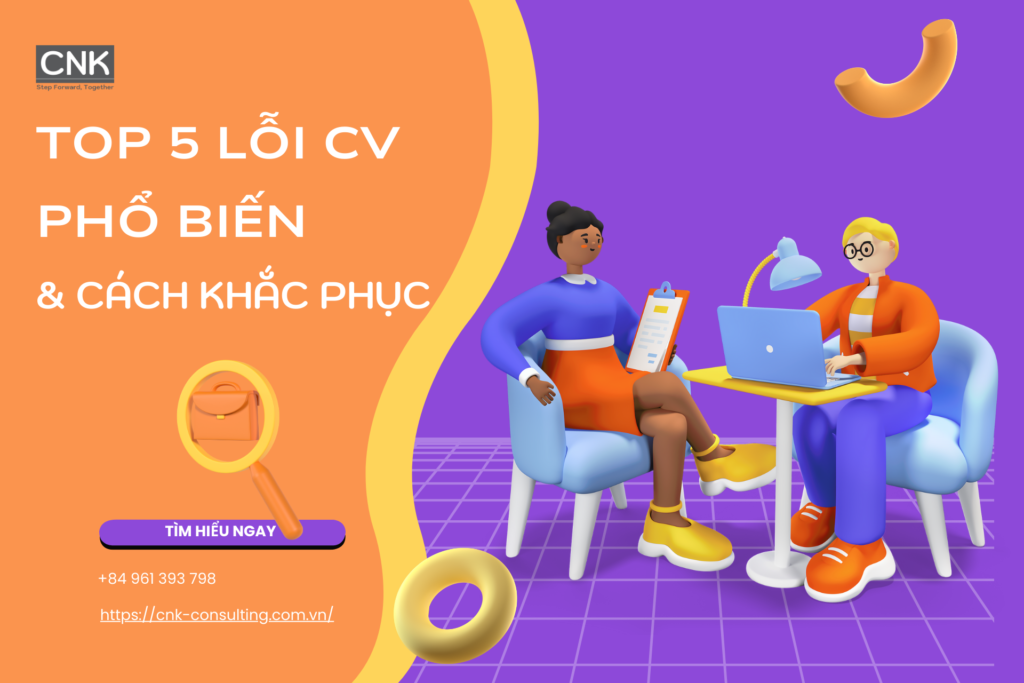
A professional CV can open up career opportunities, yet common mistakes can weaken an otherwise strong application. This article explains 5 common CV mistakes and how to correct them to make a stronger impression on employers.
Essential information to include in your CV
Your CV is your first point of contact with an employer and your most important tool for securing their attention. A strong CV goes beyond basic information to demonstrate your potential, attitude and initiative. It gives employers a reason to consider you among hundreds of other candidates.

A professional CV introduces you and helps employers assess your potential. Include the following information to give them a complete picture:
- Personal details: Help employers identify and contact you. Include your full name, phone number, email address, address and a link to your LinkedIn profile or portfolio, if available.
- Career objective: Explain your career direction. A clear objective helps employers understand your ambitions and assess whether they align with the role.
- Education: Help employers assess your academic foundation and suitability for the role. List the institutions you attended, your field of study, dates of study and notable achievements, such as scholarships, GPA or relevant research projects. If you have no work experience, your education is an important way to demonstrate your abilities, commitment and suitability.
- Skills: Show which capabilities you can apply at work. Include technical skills gained through training, IT proficiency, language skills and interpersonal or organisational skills, such as communication, teamwork and time management.
- Relevant experience and projects: Clearly describe the roles you have held, the projects you have contributed to and the results you achieved. Specific details help you avoid a common CV weakness: failing to provide convincing evidence of your abilities.
- Certifications and awards: Provide evidence of the capabilities you have developed through your studies. Relevant professional, language and IT certifications, along with awards in your chosen field, can strengthen your CV’s credibility and help you stand out to employers.
5 common CV mistakes and how to fix them
A strong CV can distinguish you from hundreds of candidates and help you take the next step in your career. However, common mistakes can undermine your application at the initial screening stage. CNK has identified 5 common CV mistakes and practical ways to address them, bringing your experience together in 1 clear, professional CV.

Missing or incorrect personal details
Some candidates fail to check their personal details, leaving an incorrect phone number, an unprofessional email address (for example, kutie123@…) or no links to social profiles. These seemingly minor oversights can make it harder for employers to contact you or weaken their first impression.
How to fix it: Use a professional email address, preferably based on your first and last names, such as ten.ho@gmail.com. Check your other details carefully and include a link to your LinkedIn profile or personal portfolio. These give employers a fuller picture of your background and strengthen your application.
Too much detail and too little focus
Many CVs run to 3 or 4 pages, listing every previous job without considering its relevance. This makes the document harder to read and obscures the strengths that deserve attention.
How to fix it: Keep your CV to 1-2 pages and focus on achievements rather than simply describing responsibilities. For example, replace “Supported sales at a fashion store” with “Proposed a customer loyalty programme that helped increase Q2 sales by 15%”. Specific figures make your achievements more credible and easier to recognise.
Spelling and grammar errors
A CV with frequent spelling or grammar errors suggests a lack of care and professionalism. This common mistake is avoidable if you allow enough time to review your writing.
How to fix it: Once you have completed your CV, read it several times or use a spelling checker to identify mistakes. You can also ask someone you know to review it with fresh eyes. A carefully written, error-free CV demonstrates that you take the opportunity seriously.
Including irrelevant experience
Many candidates include their entire work history without considering what matters for the role. The result is a disjointed CV that lacks focus and fails to connect their experience with the job requirements.
How to fix it: Select the experience that best demonstrates relevant capabilities. If you have no formal work experience, include academic projects, internships or part-time work. For example, when applying for a marketing role, “Delivered a communications campaign for a student club that attracted more than 2,000 participations” is more relevant than listing a waiting job.
Failing to show what sets you apart
Some CVs describe responsibilities without highlighting achievements. Without clear evidence of what sets you apart, your application can blend in with hundreds of others.
How to fix it: Highlight measurable results that demonstrate your contribution. For example, replace “Managed a team” with “Led 5 team members to complete a project 2 weeks ahead of schedule and reduce costs by 10%”. These figures provide compelling evidence of your capabilities.
Give your CV the attention it deserves
Avoiding these common mistakes makes your CV more professional and demonstrates careful preparation and commitment. Take the time to refine each detail so your CV can help you access new career opportunities.
>> Explore available roles and apply here
CNK Consulting Vietnam
Hotline: +84 369 882 579
Email: info@cnk-consulting.com.vn
Address: 12BT6, Thanh Bình Urban Area, 3 Nguyễn Cảnh Dị Street, Định Công Ward, Hanoi
Receive new job updates from CNK
Selected job opportunities and practical updates on applications, interviews and career development.